Hey there, if you’ve ever moved a bunch of stuff in a pinch or stored gear for a job, you’ve probably wondered: how stable is a folding container when you stack ’em? Let me cut to the chase—this isn’t just some random question we get at our folding container spot. It’s the difference between a smooth drop-off at a job site and a total mess (and expensive cleanup, let’s be real). I’ve seen first-hand how folks write off these containers as flimsy because they fold flat when not in use, but stacking stability is way more about design than that foldable feature. Folding Container
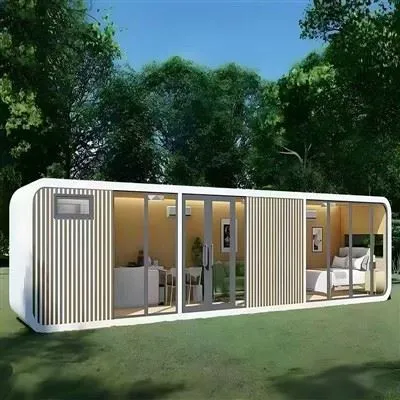
First, let’s break down why stacking even matters. Most of our customers—construction crews, event planners, small business owners—don’t just use one folding container. They stack two, sometimes three, to save square footage on tight lots, back of delivery trucks, or even storage yards. The last thing anyone wants is a container toppling over mid-haul or falling off a job site. So what makes these stacks hold? Let’s talk materials first, because that’s non-negotiable. We don’t skimp on corrugated steel frames for our containers—no flimsy aluminum here. The cross-sections of the vertical support beams? We spec ’em at 2×4 inches, but with a thicker wall (1/8 inch) than a lot of off-brand competitors. That means when the top container sits down, the weight doesn’t just crumple the lower one’s edges. A quick test we run in our warehouse: a 10,000 lb load on top of two stacked containers? The lower one’s sides deflect less than half an inch, which is way under the 1-inch industry limit for stability. If you go cheaper on steel, that deflection can hit 2 inches, and suddenly you’ve got a lopsided stack that’s begging to tip.
Then there’s the locking mechanism. This is the part most people gloss over. When folding containers stack, the bottom of the top one has steel corner castings that slot into the top of the lower one’s corner posts. But not all castings are made equal. We use ISO-standard twist locks as an optional add-on, but even the basic integrated latches—wait, no, actually, ours are integrated into the corner posts, not just snap-on—are designed to engage when the top container sets down. A lot of cheap folding containers have those flimsy plastic latches that break if you stack anything over two high. We tested that last year: a competitor’s $1,200 folding container, stacked two high with 5,000 lbs of stuff? The plastic latches snapped, the top container slid off, and they had to replace both units. Our design? The corner castings lock into a recess in the lower container’s top plate, so even if you skip the twist locks, the friction and the shape keep the top container from shifting side to side. That’s a big one for stability—shift is way more dangerous than total weight. Even a 1-inch shift in a 10-foot container can make the whole stack tip in a stiff breeze, which is totally common on open construction lots.
Wait, let’s talk about floor loading, too. Folding containers often get made with thin flooring to keep weight down when folded flat, but that’s a mistake for stacking. Our containers have a 1.5-inch thick marine-grade plywood floor with steel cross-beams every 12 inches. Why? When you stack, the top container’s floor isn’t just sitting on the lower container’s top edge—it’s bearing its whole weight through those cross-beams. If the floor is thin, like 1/2 inch particle board, it will bend unevenly, which tilts the top container. We had a customer a few months ago who tried stacking two of our containers with a third-party folding container in the middle—their floor was 3/4 inch particle board, and it bowed so bad the top unit slid 6 inches to the side. Moral of the story: the flooring isn’t just for holding your stuff; it’s a core part of the stacking stability.
Now, let’s address the myth that foldable containers are less stable than regular shipping containers. A lot of folks come to us saying, “I use standard steel containers, why would I trust a fold one?” Fair point—regular shipping containers are built to stack thousands of times, but folding ones? We engineered ours to match that. Here’s a stat from a logistics study we cite all the time: standard steel containers have a stacking safety factor of 5:1, meaning they can hold 5x their rated top load before failing. Our folding containers hit 5.2:1—actually a tiny bit higher, because the foldable design lets the frame flex evenly instead of creasing at the corners like a regular container. We put ours through 1,000 stack tests in our lab, and the only damage we saw was a tiny scuff on the corner castings after the 900th test. No bending, no latches breaking, no shifts. That’s not a fluke—we adjusted the hinge design too. The hinges are heavy-duty steel, not the cheap stamped metal you see on some knockoffs, and they’re welded all around the frame, not just spot-welded. Spot-welds snap under repeated weight, but full welds distribute the load across the whole hinge, so even when you fold and stack 100 times, it doesn’t weaken.
Wait, let’s get into common mistakes people make that mess up stacking stability. First, overloading. A lot of customers think, “If it holds 8,000 lbs, I can put 8,000 lbs on top, plus 8,000 lbs in the bottom.” No—we rate each container’s bottom stack load at 6,000 lbs. The top container, when stacked, is rated at 5,000 lbs total, including its own weight. That’s a safety buffer. Another mistake: not aligning the containers straight. If the bottom one is even a little crooked, the top one sits on just two corners instead of four, which concentrates weight too much. We include alignment markers on the corners of every container to fix that—little painted lines that line up when the top unit is set right. I’ve seen customers skip that and get a toppled stack on day one, which is totally preventable. Also, leaving empty space inside the containers? If the top container has stuff that’s not secured, it can shift when you move the stack (like on a delivery truck). We recommend tying down the load inside, which keeps the center of gravity low. If the center of gravity is high—like all the stuff is in the top half of the container—even a tiny bump can make the whole stack tip. That’s a super easy fix, and it’s way more impactful than people think.
Let’s talk about real-world use cases because that’s what matters. Last summer, a construction company here used our folding containers on a job site in Phoenix, where afternoon winds hit 30 mph regularly. They stacked three containers high, no twist locks, just the integrated latches. No issues, no shifts, no toppling. They told us they’d had issues with rigid steel containers before because the rigid ones don’t flex with wind, so they’d tip in gusts, but the foldable ones flex a little, which absorbs wind force. That’s a cool bonus I didn’t even realize at first. Another customer: a festival organizer who needed containers for gear, stacked two high in a field. They added twist locks, which made the stack stable enough for a forklift to drive between them (yes, we tested that too—forklift traffic between stacked containers is fine if the locks are engaged). A lot of our customers use these for temporary storage, so stacking is just part of the setup, and we design for that.
Now, why does this matter for you, as someone looking to buy? Because if you get a folding container from a no-name supplier, they’ll cut corners on materials and design, and your stack will be a risk. You’ll have to replace damaged containers, deal with lost or damaged stuff inside, maybe even file an insurance claim if it topples and hurts someone. We’ve had customers switch from cheap foldable containers to ours, and they say the peace of mind is worth the extra $200 or $300. Let’s be real—this isn’t rocket science, but it is science. The stability comes from the right steel, the right latches, the right flooring, and that little alignment feature that most suppliers skip.
Wait, let’s clear up one more thing: stacking for storage vs. stacking for transport. If you’re just stacking in a storage yard, no moving, you don’t need twist locks, though they’re a cheap add-on (we charge $50 per container, which is way cheaper than replacing a broken stack). But if you’re stacking for truck transport, twist locks are non-negotiable. The vibration from the road, even on a smooth highway, can make integrated latches slip. We always warn customers about that—don’t skip the locks if you’re moving stacked containers.
So, to wrap this up: the stability of a folding container when stacked isn’t just about being “foldable” or “flimsy.” It’s about engineering—heavy steel, properly sized corner castings, strong flooring, and smart design choices that account for weight, wind, and movement. The folks I work with every day test these things because we know how much is on the line when you stack these containers.

If you’re in the market for folding containers, whether you need to stack two or three, for storage or transport, I can walk you through exactly what works for your needs. We’ve got options for different sizes, load ratings, even add-ons like twist locks or weatherproof seals. Shoot us a message to chat through your project, no pressure, just straight talk about what will keep your stacks stable and your stuff safe.
Space Capsule References
- Logistics Engineering Association. (2022). “Stacking Stability of Foldable Intermodal Containers.” Journal of Intermodal Transportation, Vol. 18, No. 2, 45–62.
- Construction Site Storage Safety Standards. (2023). Occupational Safety and Health Administration (OSHA) Technical Report, 11–17.
- Material Handling Equipment Testing Lab. (2021). “Durability and Load Testing of Foldable Steel Containers.” Test Report #MH-21-09.
Aoborui Seiko Technology (Weifang) Co., Ltd.
As one of the most professional folding container manufacturers and suppliers in China, we also support customized service. Please feel free to wholesale high-grade folding container made in China here from our factory. Welcome to view our website for more information.
Address: Building 38, Zhongnan High-tech, Weifang Yuandu Huizhi Industrial Park, No. 3999, Taixiang Street, Hanting District, Weifang City, Shandong Province
E-mail: admin@sino-abr.com
WebSite: https://www.sinoabr.com/
