Hey everyone, and welcome back to the blog—today we’re diving into something I get asked about literally every week by new and old clients alike: stretch-wrapping equipment. If you’ve ever stood in a warehouse loading dock and seen a stack of pallets wrapped tight enough to withstand a forklift nudge, that’s our gear doing its thing. I’m the guy who’s been selling packaging equipment for 8 years now, and let me tell you, it’s not just “plastic wrap on a machine”—there’s a whole lot going on under the hood that makes these machines make or break your operation. Packaging Equipment

First off, let’s cut through the jargon: stretch-wrapping equipment is basically the workhorse that takes that thin, stretchy plastic film and applies it to pallets automatically (or semi-automatically, if you don’t need full power). But the features? They’re what turn a random machine into one that saves you time, cuts waste, and stops pallets from collapsing mid-shipping. Let’s start with the big one everyone cares about right now: load stability. I can’t tell you how many clients have called me panicking because half their shipment of widgets arrived broken, and it all traced back to a wobbly pallet that shifted in the trailer. The best stretch-wraps I sell don’t just pull film tight—they adjust based on what’s on the pallet. Like, if you have a top-heavy load of say, 20 boxes of floor lamps, the machine will wrap more layers on the top, where gravity’s pulling the most, and skip a layer or two on the bottom where it’s more secure. No more over-wrapping (which wastes film) or under-wrapping (which breaks loads). That’s not a gimmick—our semi-automatic turret wrappers do this automatically, and clients tell us their breakage rates drop by 30% on average.
Next up: film management, which is where most cheap machines cut corners, and you end up paying more long-term. Let’s be real—film is a huge expense for packaging teams. A lot of older stretch-wrappers use a fixed stretch ratio, like 200%, no matter what. But the good ones let you tweak that ratio—like cranking it to 300% for light loads (that’s way more stretch, less film used) and dialing it back to 150% for heavy, dense loads so you don’t waste thin film that’ll rip. Wait, and have you heard of pre-stretch vs. mechanical stretch? A lot of people mix those up. Pre-stretch (the good kind) pulls the film before it even touches the pallet, so you’re not wasting energy stretching it as you wrap. The mechanical stuff? That’s when the turret yanks the film on the fly, which uses way more power and makes the film thinner, more likely to tear. I only sell machines with calibrated pre-stretch systems—clients save 15-20% on film costs just from that feature alone, and that adds up fast when you’re going through 10+ rolls a day.
Then there’s user-friendliness, which is non-negotiable if you don’t want your warehouse crew hating the new machine. I see so many factories bring in super technical stretch-wrappers that require a 2-hour training session, and then the guys on the floor just go back to hand-wrapping because it’s easier. The machines I offer have a touchscreen interface that’s basically like using your phone—you type in the pallet size, load type (light, heavy, top-heavy), and it auto-sets the wrap pattern. No 100-page manuals, no confusing knobs. Also, maintenance is a pain point for everyone. The best stretch-wrapping equipment has quick-release parts—like the film roll holder and the turret—so if something jams, a crew member can pop it open, swap the part, and be back to wrapping in 5 minutes, not 45 waiting for a technician. Last month, a client of mine in Nashville had a jam at 3 a.m. before a shipping run, and his old machine took an hour to fix. Our machine? He swapped the film holder, was good to go, and saved like $2k in rush shipping fees. Win.
Let’s not forget about adaptability, because not every pallet is the same. You might have a standard 48×40 pallet of soda cases one day, and a weird, lumpy pallet of custom furniture parts the next. The stretch-wrappers I sell let you adjust multiple wrap patterns—like spiral wrapping for loose loads, cross-wrapping for super heavy stuff, or even top-sheet application so you don’t have to lay cardboard by hand on messy loads. Oh, and if you have pallets with extra tall loads (like 10 feet of shelving units), some of our machines have adjustable height turrets that go up to 12 feet, no problem. We even have models that work with both hand-wrap films and machine-grade films, so if a client is testing out a new film type, they don’t have to buy a whole new machine. That’s a big one for small to mid-sized businesses that don’t want to drop $20k on a machine and be stuck with it forever.
Now, let’s talk about durability, because I’ve seen clients buy cheap stretch-wrappers online for $5k, and they die in 6 months. The equipment I sell is built for warehouse floors—stainless steel frames to handle spills (like soda or cleaning chemicals), heavy-duty motors that run 24/7 if needed, and parts that are easy to source (no waiting 2 weeks for a replacement part from some overseas brand). A lot of our clients run 10-hour shifts, 5 days a week, and these machines hold up. I had a client in Dallas who’s had our turret wrapper for 3 years, and the only thing he’s replaced is the film holder—no motor issues, no electrical problems. That’s a way better investment than replacing a $5k machine every 6 months, trust me.
Wait, and let’s touch on safety, which is something I wish more packaging teams focused on. Hand-wrapping pallets is a nightmare—crews are stretching film, reaching around heavy loads, leaning off forklifts, getting scraped by sharp edges, even pulling muscles from tugging film tight. Our semi-automatic and automatic stretch-wrappers keep the crew safe: the film is fed through the machine, no more tugging, and the wrap cycle is automated so they don’t have to get close to moving parts. Some models even have safety sensors that stop the turret if something (like a hand) gets in the way—no more trips to the ER because someone got caught. I had a client whose hand-wrapping team had 3 minor injuries in 2 months, switched to our machine, and hasn’t had a single one since. That’s not just a convenience—it’s saving them money on workers’ comp.
Let me wrap this up (pun intended) with a real example, because numbers make it real. Last quarter, a new client in Atlanta came to me. They were hand-wrapping 80 pallets a day, 2 people per shift, working 10 hours, spending $1,200 a week on film, and having 2-3 pallet collapses a week, plus 1 worker’s comp claim. We sold them our semi-automatic stretch-wrapper with calibrated pre-stretch, auto-load sensing, and safety sensors. Let’s run the numbers: now they wrap 80 pallets in 4 hours, 1 person per shift, film costs dropped to $950 a week, pallet collapses are down to 0, and they haven’t had any injuries. That’s a $10,000+ annual savings, plus less stress for the crew.
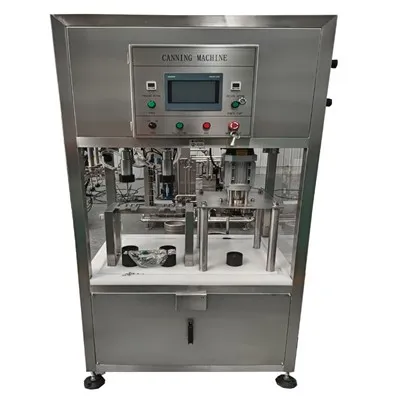
If you’re tired of wasting film, dealing with broken pallets, or losing crew time to hand-wrapping, this is where you want to be. I’ve seen every scenario—small mom-and-pop shops with 10 pallets a day, big distribution centers with 500—so I can match you to the right stretch-wrapping equipment, no hard sell, no hidden fees. Hit me up, and we can chat through your specific needs, no pressure.
Pad Printing Machine References:
- American Society of Mechanical Engineers (ASME) B30.20: Safety Standard for Conveyors and Related Equipment, 2022
- Packaging Association for Flexible Packaging (PAFP) Stretch Wrap Efficiency Report, 2023
- Material Handling Industry (MHI) Warehouse Load Stability Best Practices, 2024
Henan Seveneh Trading Co., Ltd.
As one of the most professional packaging equipment manufacturers and suppliers in China, we’re featured by quality products and good price. Please rest assured to buy advanced packaging equipment made in China here from our factory. We also accept customized orders.
Address: No.102 Wenhui Road, Economic Development Zone, Zhumadian City, Henan Province, China
E-mail: hnseveneh@gmail.com
WebSite: https://www.seveneh.com/
