Hey everyone, Metal Parts Hot Dip Galvanizing Equipment
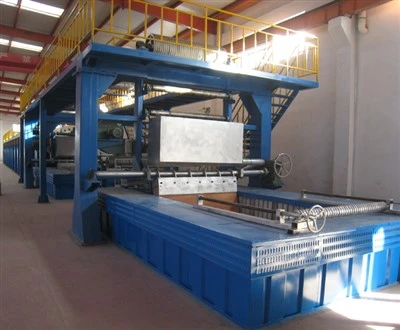
If you’re in the metal parts hot dip galvanizing game, you’ve probably stared at two types of equipment and wondered which one’s going to drain your bank account more—gas or electric. I’ve been around this industry for over 15 years, running a company that supplies both types of galvanizing setups, and let me tell you, it’s not as straightforward as “gas is cheaper” or “electric saves money.” A lot of small fabricators get stuck on surface-level numbers, but the real cost hits you in hidden spots I’ve seen way too many guys miss. Let’s break this down like we’re chatting over a coffee after a long day at the shop.
First off, let’s get a quick baseline: hot dip galvanizing works by dipping metal parts into molten zinc to prevent rust. Gas equipment uses natural gas (or sometimes propane) to heat the zinc kettle, while electric uses resistive heating elements or induction coils. Both do the same job, but their cost structure is totally different. The key here isn’t just the price per unit of energy—it’s how much energy each type actually uses, plus all the little fees that pop up when you run the gear day in and day out.
Let’s start with the obvious: energy costs. I check energy rates for clients all the time, and in most parts of North America, natural gas is still cheaper than electricity per therm. Wait, let’s do the math quick—one therm of natural gas costs like $1.50 to $2, while a therm of electricity (which is 100 kWh, for anyone who’s not a total energy nerd) runs $3 to $5, depending on where you live. That’s a huge gap on paper, right? But hold on—gas kettles lose a ton of heat through the walls and the vent. They’re not 100% efficient. A standard gas galvanizing kettle is only around 60-70% efficient, because all that exhaust heat goes right out the stack. Electric? If you’re using resistive elements, they’re 85-90% efficient, and induction heaters? Even higher—up to 95%, because they heat the zinc directly without wasting energy on the kettle itself. So that $1.50 therm for gas turns into a usable heat cost of about $2.14-$2.50, while the $3 electric therm (converted to therms, it’s $3 per 100 kWh = $3 per therm) gives you usable heat for just around $3.15. Wait, now that gap’s way smaller. But it still leans gas, right? Not so fast—let’s add in other energy-related costs.
Gas equipment needs maintenance on burners, valves, pipes, and the vent stack. I’ve seen guys spend $500-$1,000 a year just keeping the gas burner from clogging or the regulator from failing. Electric? The heating elements last longer (we supply elements that run 10+ years vs. gas burners that often need replacing every 3-5), and the only electrical upkeep is checking connections and the control panel—way less costly. Also, if you’re in an area with demand charges (a lot of commercial electric providers hit you extra for high power use at peak times), that can blow the electric cost up. But wait—what if you run your galvanizing line 24/7? Demand charges apply, but if you’re only running 8 hours a day, they might not matter. Gas doesn’t have demand charges, so that’s a win there.
Next up: initial equipment cost. A lot of new fabricators fixate on this, and it’s a big mistake. Basic gas galvanizing kettles are usually cheaper upfront—like, a 10-foot gas kettle might be $80k-$100k. The same size electric kettle? $90k-$120k. But wait, electric doesn’t need a bunch of extra stuff: gas requires a separate fuel storage tank (if you’re not hooked up to a pipeline), a vent system, and sometimes a separate gas line installation. That can add $10k-$20k to the gas setup, pushing the total cost close to electric. Also, if you’re on a tight budget, electric might qualify for tax incentives—lots of governments are pushing for electric equipment to cut emissions, so you can get 10-30% back on your electric galvanizing gear. I had a client last year save $18k on a $90k electric kettle, which made it way cheaper than the adjusted gas cost. That’s a big one most people don’t look for until they’re filling out tax forms.
Now let’s talk about downtime, because downtime is money lost. How often does your equipment break, and how long does it take to fix? Gas kettles: burners can get clogged with debris from the zinc, valves can freeze (we’ve had clients in cold northern states deal with that), and vent stacks can get blocked with zinc fumes. I’ve seen a gas kettle go down for 2-3 days waiting for a replacement burner part—during that time, a small shop can lose $2k-$3k in revenue from not being able to process parts. Electric heating elements? They rarely fail suddenly, and replacements take 30 minutes to swap out. The control panels for electric gear are also way simpler—fewer moving parts, so less to break. One of our long-term clients runs a 12-foot electric kettle 10 hours a day, 5 days a week, and he’s only had one element go bad in 7 years. The same guy had his gas kettle break 4 times in a year back when he ran that, costing him almost $15k in lost business. That’s a huge hidden cost a lot of guys miss when they’re just looking at energy prices.
Zinc consumption is another thing. Wait, you might be thinking “zinc is zinc, right?” Not really. Gas kettles heat the zinc unevenly—some parts of the kettle are hotter than others, so the zinc evaporates faster. I’ve seen clients go through 5-10% more zinc a year with gas vs. electric. Why? Electric’s even heating means less zinc vaporizes into fumes that you have to replenish. That’s not just the cost of zinc—zinc is a big expense, especially if you’re processing a lot of parts. Last I checked, zinc was around $1.20 a pound, so if you go through 1,000 extra pounds a year, that’s $1,200 down the drain. Multiply that by 5 years, and that’s $6k you didn’t need to spend.
Now let’s get real: it depends on your operation. If you’re a small shop running 8 hours a day, 5 days a week, and you’re in an area where natural gas is super cheap (like parts of Texas or Oklahoma), gas might be the way to go. But if you’re a mid-to-large shop running 10+ hours a day, or you’re in an area where electricity is cheaper (like the Pacific Northwest, where hydro makes electric rates low), electric starts to come out ahead. Also, if you’re worried about emissions, a lot of cities are cracking down on gas fumes from galvanizing—you might have to install expensive pollution controls for gas, which adds another $5k-$15k. Electric doesn’t have that problem, so no extra costs there.
Wait, let’s clear up a myth I hear all the time: “electric is way more energy efficient, so it’s always better.” Yeah, but if your electric rate is sky-high (like in some parts of New York City, where electric is $0.25 per kWh), even with higher efficiency, electric will cost more than gas. I did a quick calculation for a client in NYC last year: gas cost him $0.06 per kWh equivalent, electric was $0.25, so even with efficiency, gas came out $1,800 cheaper a year. But for a client in Seattle, electric was $0.09 per kWh, so electric was $2,200 cheaper a year. It all boils down to your location and how much you run the gear.
Another thing to consider: scalability. If you’re planning to expand your galvanizing line down the road, electric gear is way easier to add to. You don’t need to dig new gas lines or install a bigger storage tank—just add more heating elements or upgrade your electrical panel. Gas would require a whole new fuel setup, which is more expensive and time-consuming. I had a client who started small with a 6-foot gas kettle, and when he doubled his business, he had to replace the entire gas fuel system to handle a 12-foot kettle. If he’d gone electric, he could’ve just added elements and expanded without tearing out his gas setup.
Let’s talk about maintenance labor too. If you’re a small shop with only a couple of guys, do you have someone who can fix a gas burner? Probably not—you’ll have to call a HVAC technician, who charges $100-$150 an hour. Electric repairs? Your shop hand can look at a basic control panel or swap a heating element without a specialist, so you save on labor. I’ve seen a client spend $1,200 on a HVAC repair for his gas burner, while another client spent $150 on a new heating element that his intern swapped in 20 minutes. That’s a massive difference in ongoing costs.
Wait, what about the quality of the galvanizing? Does gas vs. electric affect the finish? I’ve seen guys say gas gives a better, smoother coating, but that’s mostly from old, inefficient gas kettles. Modern electric kettles with induction heating give a super consistent temperature, so the zinc coating is even and adheres better. That means fewer reworks, which saves you money on material and labor for re-dipping parts. Rework is a big one—if 5% of your parts need to be redone, that’s 5% more energy, 5% more zinc, and 5% more labor down the drain. Consistent heat from electric cuts reworks by a lot, which adds up.
Okay, let’s wrap this up with a real example. I have two clients I work with: one is a small 2-person shop in Dallas, running 8 hours a day, 5 days a week. He has a 10-foot gas kettle. His annual total cost (energy, maintenance, zinc, downtime) is around $18,500. The other is a mid-sized shop in Portland, running 12 hours a day, 6 days a week, with a 10-foot electric kettle. His total annual cost is around $17,200. That’s $1,300 a year cheaper, even though his initial electric kettle was $5k more than the gas one. And he’s saving on tax incentives, too, so his total upfront cost was almost the same as the Dallas guy’s. But if the Portland shop expanded to 20 hours a day, the electric would save even more—they’re looking at adding another 12-foot electric kettle next year, and we crunched the numbers and it’ll save them $3,500 a year vs. adding a gas kettle.
So what’s the takeaway? There’s no one-size-fits-all answer. Gas might be cheaper if you’re a small, low-run shop with cheap natural gas. Electric is better if you’re a mid-to-large shop with high run times, or you can get tax incentives, or you’re worried about downtime or emissions. But here’s the thing—most guys don’t do the full cost breakdown. They just look at energy price per unit and pick the cheapest, and miss all the hidden costs.
If you’re trying to figure out which is better for your shop, don’t just guess. We can run a custom cost analysis for you—we’ll plug in your location, your run time, your current energy rates, and the size of the kettle you need, and tell you exactly which will cost less over 5 years, not just the first year. No sales pitch, just real numbers based on what our actual clients are experiencing.
If you’re looking to upgrade your galvanizing equipment, or you’re ready to crunch the numbers and see if gas or electric is right for you, get in touch with us. We’re here to help you avoid the mistakes I’ve seen so many new fabricators make, and get the gear that saves you the most money in the long run.
Wait, one last thing: don’t forget to account for future changes. Energy rates go up—gas is volatile because it’s tied to oil prices, while electric is getting cheaper with more renewables. A year from now, natural gas might jump 20%, making your old gas setup way more expensive. Electric is more stable, so you can budget for it easier.
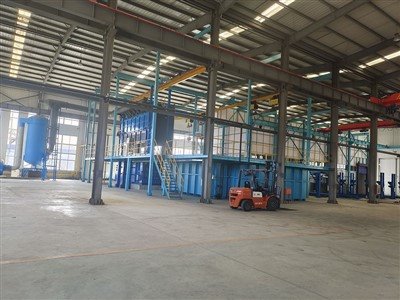
Alright, that’s the real talk. If you have questions, or you want a custom analysis, reach out to us. We’ve got the equipment, the experience, and the data to help you make the right call. Don’t waste money on the wrong setup—let’s chat.
Wire Galvanizing Equipment References
- Hot Dip Galvanizing Association. (2022). Energy Efficiency in Galvanizing Equipment.
- U.S. Department of Energy. (2023). Commercial Electric and Gas Equipment Cost Comparison.
- National Association of Galvanizers. (2021). Hidden Costs of Galvanizing Equipment Downtime.
Jinzhou Hongri Galvanizing Equipment Co., Ltd.
As one of the most professional metal parts hot dip galvanizing equipment manufacturers and suppliers in China, we’re featured by quality products and good price. Please rest assured to buy durable metal parts hot dip galvanizing equipment for sale here from our factory. We also accept customized orders.
Address: Yingpan Industrial Park, Taihe District, Jinzhou City. Address: No. 90, Gongwei Street.
E-mail: rsea.jz@163.com
WebSite: https://www.hrgalvanize.com/
