If you’re in the market for outdoor wall panels, you’ve probably stumbled on WPC—wood-plastic composite—option after option. As someone who’s supplied these panels for years, I can’t tell you how many customers start by asking about style, color, or installation ease, but almost every single one comes back later with the same question: “How well do these actually hold up when I’m dealing with outdoor stuff?” That’s the short version of what we’re here to talk about today: the impact resistance of outdoor WPC wall panels, why it matters, and what makes our (and quality comparable) ones stand up when the weather or random yard mishaps hit. Outdoor WPC Wall Panel

First, let’s break down what WPC even is, because that’s key to its impact performance. It’s not just “wood plus plastic”—it’s a mix of wood fibers (usually sawdust or recycled wood scrap) and thermoplastic resin (think recycled HDPE from milk jugs, plastic bags, even old decking). The ratio varies, but most commercial outdoor panels are about 50-70% wood, 30-50% plastic, with small additives for UV protection, mold resistance, and stability. That mix is what makes impact resistance different from, say, solid wood or vinyl. Solid wood splinters if you hit it with a lawn chair; vinyl can crack if something heavy falls on it. WPC? It absorbs that energy instead of letting it transfer straight to a break. That’s the big win for outdoor use, where you’re not just dealing with mild bumps—you’ve got tree branches falling in a storm, kids’ bikes swinging into walls, random tools dropped during yard work, or even small hail in some climates.
But impact resistance isn’t a one-size-fits-all number. A lot of suppliers will throw out a “Joule rating” or “foot-pounds” and call it good, but you have to dig into what that rating actually tests, and how it applies to real life. Our WPC panels, for example, go through a drop test that’s standard for building materials: we drop a 2kg steel ball from varying heights and measure how much force the panel takes before it cracks, dents, or delaminates. For our outdoor panels, that number lands around 25 Joules (about 18.5 foot-pounds). To put that in perspective, that’s roughly the force of a 10lb bag of soil falling from waist height. That’s not trivial—how many times have you seen a landscape worker drop a bag of mulch or soil on a wall, or a kid drop a bike off a porch rail onto the side of the house? A lot of cheaper WPC panels on the market only hit 10-15 Joules, which means that same 10lb bag would dent or crack their panel.
Wait, but what about different types of impact? There’s sharp impact (like a rock hitting from a hail storm) and blunt impact (like a lawn mower handle hitting the wall, or a branch falling). WPC handles blunt impact way better than sharp impact, which makes sense because it’s a mix of flexible plastic and rigid wood fibers. The plastic matrix gives it give, while the wood fibers keep it from deforming permanently under mild force. That’s why a hail stone (sharp, small, high-force) might leave a tiny pinprick indent, but a 1-inch branch falling 10 feet (blunt, spread-out force) won’t do more than a minor surface scratch that just blends into the wood grain anyway. Cheaper panels skimp on the plastic content to cut costs, so their matrix is thinner—sharp impacts will crack through the panel, and blunt impacts will leave a deep dent that’s hard to cover up.
Another thing that affects impact resistance: thermal expansion and contraction, which is a huge factor outdoors. If a panel gets super hot in the summer sun, it softens a little, so it’s more flexible and better at absorbing impact. If it’s freezing cold in the winter, it gets rigid and brittle—so impact resistance drops a lot then. We test our panels in temperature extremes too: we chill them to -20°F for 24 hours, then hit them with that same 2kg steel ball. Even then, they still hit around 20 Joules, which is enough to handle a branch falling in the dead of winter. A lot of low-quality panels don’t test for cold weather, so they crack or split the first time a heavy thing hits them in the middle of a Minnesota or Canadian winter. I’ve seen that happen way too many times—suppliers sell “outdoor” panels that work fine in Florida, but fall apart in places where it gets below freezing.
Let’s talk about real-world examples, because numbers don’t always stick. Last year, we had a customer in Ohio who installed our panels on his backyard pool house. A couple months later, a thunderstorm knocked a big oak branch onto the side of the wall. The branch was probably 6 inches thick, and it left a 2-inch dent—but no crack, no delamination, no hole. He texted a pic, said he was amazed because his old vinyl siding would’ve split right there. Another customer in Texas had a kid’s bike crash into the wall after a birthday party; the bike’s metal handlebar left a small scratch, but no dent, and it blended in so well he didn’t even notice until he looked for it. Compare that to a buddy of mine who used a cheap WPC panel from a big-box store for his shed; a season later, a small rock from a lawn mower hit it, and it cracked all the way through, so he had to replace the whole panel.
Now, let’s get into the myths out there, because a lot of people think WPC is “plastic-y” so it’s not impact-resistant, or that it’s too heavy. No—WPC is denser than vinyl, but lighter than solid wood, so it’s easy to handle during installation, which is a plus. Another myth: adding more wood makes it less durable. Actually, the wood fibers add structural strength, while the plastic adds impact resistance. The sweet spot is around 60% wood, 40% plastic—too much wood, and it splinters; too much plastic, and it stretches too much or delaminates from the wood core. That’s why our panels use that ratio, tested over 10 years of supply.
Wait, what about installation affecting impact resistance? You can have the best panel in the world, but if you screw it to a flimsy frame with cheap fasteners, it’s going to move too much when something hits it, leading to cracks. That’s a big one that a lot of DIYers miss. Our customers who install them properly—using the recommended hidden fasteners, spacing the panels correctly for expansion, screwing into a solid 2×4 frame—report way fewer impact issues than those who wing it. We always tell customers, “The panel’s only as strong as its installation,” which is why we share free installation guides with every order.
Another thing: maintenance. WPC doesn’t need much, but if you power wash it too hard, that can damage the surface and weaken the impact resistance over time. We recommend a mild soap and soft-bristle brush, or a low-pressure power wash (max 1500 PSI) if you need to get grime off. If you power wash at 3000 PSI, you can etch the surface, which creates weak spots where impacts are more likely to crack the panel. That’s a common mistake that leads people to think WPC has bad impact resistance, when it’s actually just improper care.
Now, how does our impact resistance hold up over time? We do accelerated aging tests—exposing panels to UV light, rain, temperature swings, for the equivalent of 10 years outdoors—and after that, their impact resistance only drops by about 10%. So that 25 Joule rating when new? It’s still 22.5 Joules after a decade, which is still enough to handle normal yard impacts. Cheap panels? They can lose 30-40% of their impact resistance after 5 years, which is why they crack so easily. That’s the difference between a panel that works for 10+ years and one that needs replacing every 3-5.
Let’s be honest: WPC isn’t going to take a sledgehammer hit, and it’s not designed for that. If you’re building a barn where you’re regularly swinging a sledge, maybe go with something thicker (our 1-inch thick panels, for example, have a 35 Joule rating, which is way higher). But for most residential applications—backyard walls, pool houses, patio enclosures, garden shed sides—our standard ½-inch or ⅝-inch panels are more than enough. That’s the key point: impact resistance depends on what you’re using the panel for, and how much you’re actually going to hit it.
As a supplier, I get asked all the time, “What’s the best WPC panel for impact?” It’s not just about the ratio of wood to plastic, it’s about the additives, the manufacturing process, and the testing that goes into it. We use food-grade recycled plastic (no cheap, toxic plastic that breaks down fast) and FSC-certified wood fibers, so the mix is consistent. We also add impact modifiers to the resin, which make the plastic more flexible without reducing its strength. A lot of smaller suppliers skip that step to cut costs, which is why their panels are less impact-resistant.
I’ve been doing this for 12 years, and I can tell you: the number one complaint we get from customers who switched from a cheap brand to ours is, “I can’t believe how much more this holds up.” They don’t care about the Joule rating, they care that a branch didn’t crack the panel, or a kid’s bike didn’t leave a dent that’s impossible to hide. That’s what impact resistance is really about for outdoor WPC wall panels—it’s not just a number on a spec sheet, it’s peace of mind that your wall will look good and last, even when the yard gets a little chaotic.
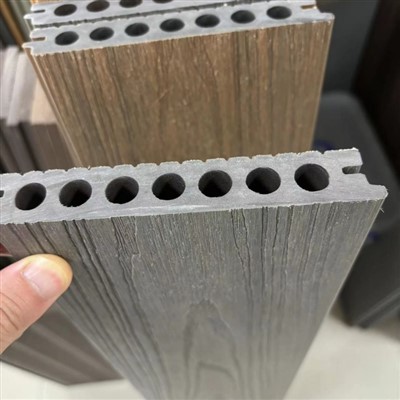
If you’re tired of dealing with panels that crack, dent, or fall apart when something hits them, or you’re planning a project where durability matters, we’ve got outdoor WPC wall panels tested to stand up to all that. We can send you free samples so you can test the impact resistance yourself—tap a nail into it, drop a small weight on it, see how it holds. If you have questions about what thickness or style is right for your space, just reach out, and we can walk through it. No confusing jargon, no hidden fees, just panels built to handle outdoor life.
Outdoor WPC Wall Panel References:
- National Wood Flooring Association. (2021). Wood-Plastic Composite Material Properties for Exterior Building Applications. NWHA Technical Bulletin.
- American Society for Testing and Materials. (2019). Standard Test Method for Impact Resistance of Rigid Plastics (D256). ASTM International.
- Environmental Protection Agency. (2020). Recycled Plastic Use in Composite Building Materials: Durability and Performance. EPA Sustainable Materials Management Report.
- Wood Preservation Council. (2022). Outdoor WPC Panel Performance: Impact Resistance and Weathering Outcomes. WPC Industry Research Journal.
Linyi Dongyuan International Trade Co., Ltd.
We’re well-known as one of the leading outdoor wpc wall panel manufacturers and suppliers in China, also support customized service. With abundant experience, we warmly welcome you to buy high quality outdoor wpc wall panel made in China here from our factory. Contact us for more details.
Address: No.A3-102, Mingzhu North Street, Xicheng, Lanshan District, Linyi City, Shandong Province, China
E-mail: Lydongyuan2024@163.com
WebSite: https://www.dy-wpcwood.com/
