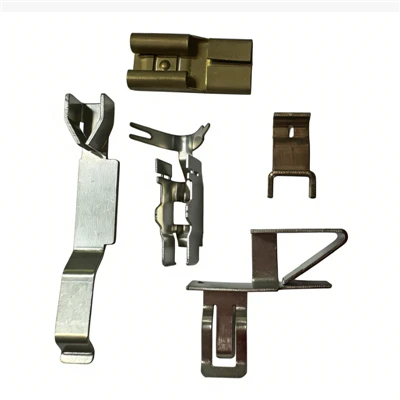
If you’ve ever needed stamped parts for your products—whether it’s automotive brackets, appliance housings, or even tiny electronic connectors—you know that the press is the backbone of every stamping job. As a stamping forming supplier with years of field experience, I’ve spent countless hours troubleshooting presses, adjusting their settings, and matching the right machine to the job at hand. Most people new to manufacturing have no clue there’s way more to stamping presses than just a big metal machine that slams things together. Let me break down the main types we actually use day-to-day, and when we reach for each one—since picking the wrong press can turn a simple, low-cost order into a total headache. Stamping Forming
First up, there’s the mechanical press, and this is the workhorse of almost every stamping shop, including ours. If you’ve never seen one in action, imagine a giant, heavy-duty lever driven by a motor that cranks a flywheel to create that downward stamping force. The big draw here? They’re fast—like, stupid fast compared to other types. A typical mechanical press can crank out 10 to 100+ parts per minute, depending on the tonnage. That’s why we use them for high-volume jobs, like making thousands of identical door hinges for a big appliance brand or small brackets for car frames. The catch, though? They only have force at the very bottom of their stroke. Think of it like kicking a ball: all your power is at the end of the movement, so if you need consistent force through the whole stamping process (like deep drawing a cup or a complex part), a mechanical press won’t cut it. It can also be a bit tricky to adjust, and if you don’t set it up right, you can damage the die or the part way easier than with other press types. We keep a handful of these around for our bread-and-butter, high-run jobs, but we don’t rely on them for everything.
Next, hydraulic presses. These are the exact opposite of mechanical presses in a lot of ways, and they’re our go-to for any job that needs that consistent, steady force. Instead of a crank and flywheel, hydraulic presses use fluid pressure (usually oil or water-based) to push the ram down. The best part? We can dial in exactly how much force we need, right down to the pound, and maintain that force for as long as we want during the stamping cycle. That’s perfect for deep drawing—like making a stainless steel sink or a large casing for a power tool—where you need to pull the metal slowly without tearing it. They also have a longer stroke, so we can work with thicker materials or parts that need more room to move through the stamping process. The downside? They’re way slower than mechanical presses—like, maybe 5 to 20 parts per minute max, depending on size. So we don’t use them for 10,000 small brackets; we save them for specialized, lower-volume jobs that need precision and consistent force. Another thing I love about hydraulic presses is that they’re easier to adjust for different part sizes—if we get a last-minute change to a customer’s order, we can tweak the force or stroke in minutes, no major die overhauls needed.
Then there’s the servo press, which is the new kid on the block, and it’s been a game-changer for us over the last 5 years or so. Servo presses use electric servo motors instead of mechanical cranks or hydraulic fluid, so we have total control over every part of the stamping cycle. We can speed up the ram when it’s moving down towards the part, slow it way down during the actual stamping to make sure we get a clean, accurate cut or form, and even adjust the speed mid-stroke if we notice a part is tearing. That flexibility means we can get the precision of a hydraulic press with the speed of a mechanical press, which is huge for medium-volume jobs that used to be a trade-off. For example, we recently had a customer order 50,000 custom electrical terminals that needed tight tolerances on both the cut and the bend. A mechanical press would’ve cut them too fast and left sharp edges, a hydraulic press would’ve taken too long to hit their delivery date, but the servo press nailed it on both. They’re a bit pricier to run and maintain than the other two, but the versatility makes them worth every penny for our shop. We also use them for jobs that require progressive stamping, where the part moves through multiple stations in one pass—being able to adjust the speed for each station reduces scrap a lot.
Wait, I should mention speciality presses too, because we don’t just stick to the big three. For jobs that involve really thin materials, like foil or ultra-small electronic components, we use high-speed presses. These are basically mechanical presses turbocharged for speed—some can crank out over 1,000 parts per minute. The key here is that they have extra precision to stop the ram at exact tiny positions, so we don’t deform the thin material. We use these for things like the tiny pins in a phone charger or the contact points in a circuit board. On the flip side, for super heavy-duty jobs, like stamping thick steel parts for construction equipment or truck frames, we use presses with way higher tonnage—some up to 2,000 tons or more. These are usually a type of hydraulic or servo press, built to handle the massive force needed to bend or cut thick metal without warping or damaging the tooling.
Another speciality I’ve gotten questions about lately is warm stamping presses, which we use for materials that are hard to form at room temperature, like high-strength steel or titanium. The press heats the metal a bit during the stamping process, making it more malleable so we can form complex shapes without cracking. A lot of automotive customers come to us for this now, because they’re switching to lighter high-strength steel to improve gas mileage, and warm stamping is the only way to get the exact shapes they need. It’s a bit more work than standard stamping, but it’s become a go-to service for our long-term clients.
Let me be real with you—one of the biggest mistakes new companies make is picking the wrong press for their part. I’ve seen a small startup spend a fortune on a high-speed mechanical press, only to realize their product needs deep drawing, so the machine is basically useless for their actual job. Or a larger company use a slow hydraulic press for a 100,000-part run, blowing their budget on labor and time. That’s why we work with every customer to first figure out exactly what they need: what material are they using, how thick is it, what’s the part shape, how many do they need, and what tolerances are non-negotiable. Then we match the right press to the job, instead of forcing the job to fit the machine.
For example, last year, a customer came to us with a small order for 2,000 custom metal brackets for a prototype they were building. They initially thought they needed a mechanical press, but when we looked at the design, the bracket required a 2-inch deep draw, which a mechanical press couldn’t do without ruining the part. We used our hydraulic press, finished the job in 3 days instead of the projected 5, and they were able to get their prototype to testing on time. That’s the kind of value we bring—not just stamping parts, but guiding customers to use the right tools for their needs.
I should also mention that press maintenance is a huge part of consistent stamping, no matter which type you use. We do daily checks: oil levels for hydraulics, motor calibration for servos, flywheel tightness for mechanical presses. A small issue with a press can lead to thousands of bad parts, which is bad for our reputation and our customers’ deadlines. Last quarter, we caught a tiny leak in a hydraulic press’s line before it caused a whole batch of parts to be misformed—something we would’ve missed if we skipped our daily checks.
At the end of the day, all these press types serve a purpose, and as a stamping forming supplier, our job is to know when to use each one. Whether you need a high-volume run of simple parts, a custom low-volume prototype, or a tricky job that needs precision and control, we have the right press and the experience to get it done right. If you’ve got a stamping project coming up, big or small, don’t waste time guessing which press you need. Reach out, tell us about your part, material, and order size, and we’ll help you pick the perfect setup to get quality parts on time and on budget. We’re here to make your stamping process as smooth as possible, no headaches required.
Machining Services References:
- Townsend, D.P. (2018). Metal Stamping and Forming Technology. Industrial Press Inc.
- Kalpakjian, S., & Schmid, S.R. (2020). Manufacturing Processes for Engineering Materials (8th ed.). Pearson.
- George, M.W. (2021). Servo Press Technology in Modern Stamping Operations. Journal of Manufacturing Processes, 67, 452-465.
- ASM International. (2019). Metals Handbook: Forming and Forging (11th ed.). ASM International.
Dongguan Xinchuan Precision Manufacturing Co., Ltd.
As one of the most professional stamping forming manufacturers and suppliers in China, we offer a quick lead time for customized orders. Please feel free to buy precision stamping forming made in China here from our factory. Contact us for quotation.
Address: #16 Gangjian Road, Changping Town, Dongguan City, Guangdong, China. 523000
E-mail: FreeQuote@xcprecision.com
WebSite: https://www.xcprecisions.com/
