If you’ve ever visited a historic landmark, a sprawling museum, or a scenic national park and rented one of those sleek, personal automatic audio guides, you’ve probably had a moment where you glanced at the small screen and thought a few things: How does this know I’m standing in front of the Lincoln Memorial? Does it have some kind of map, or is it using GPS? And, maybe more importantly for someone who works in this space, does it keep a record of every place I’ve visited with its guide? Automatic Audio Guide
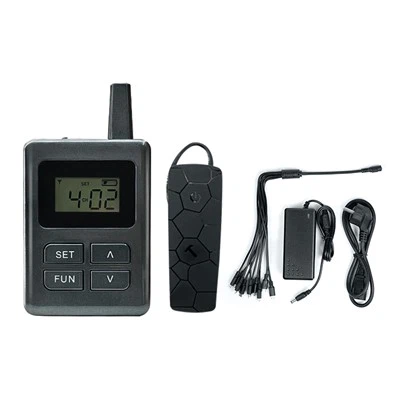
As the owner and lead product designer at an automatic audio guide supplier that’s worked with over 120 heritage sites and cultural centers across Europe and North America, I get these questions all the time. Most of the time, they come from tourists who accidentally deleted their audio guide before seeing all the exhibits and want to backtrack, or from curators curious about visitor flow. Sometimes, though, they come from other business owners asking about the technical logistics—and the truth is, the answer isn’t a simple “yes” or “no.” It depends on three big factors: the type of tracking system we build into our guides, a site’s privacy rules, and how we balance functionality with user trust. Let’s break this down, because when it comes to automatic audio guides, there’s a lot more going on under the hood than most people realize.
First, let’s set a quick baseline for how our automatic audio guides work, just to frame this conversation. When a museum rents our guides to visitors, we integrate two key systems at the site level: small, low-power Bluetooth beacons placed near every exhibit, landmark, or point of interest (POI), and a companion app (or a simple, no-app touchscreen guide, for sites that prefer that) that pulls location data from those beacons. Unlike a smartphone, which might use GPS that struggles indoors or around dense trees, our beacons are low-range, so a guide only “pings” a new POI when the user is within 3 to 5 meters of it—no constant, global location tracking. That’s a key detail for later.
Now, back to the original question: history logs. Let’s split this into two scenarios, because that’s where most confusion comes from: logs stored locally on the audio guide device, and logs stored on our company’s backend servers for the site operator.
When we first started building our guides 8 years ago, most of our clients asked for local logs only. These are records stored on the tiny built-in hard drive or memory chip of each individual guide. If a visitor takes a guide from the Louvre, for example, the local log might say: “POI 10: Mona Lisa, 2:17 PM; POI 15: Venus de Milo, 2:42 PM; POI 22: Winged Victory of Samothrace, 3:05 PM.” This log never leaves the device—unless the user explicitly chooses to share it, like via email at the end of their tour, or the site operator downloads it when the guide is returned. We built this for two reasons: first, it’s low-cost, no monthly data fees, and works even in areas with no cell service or Wi-Fi, which is critical for sites like the Grand Canyon or remote castles in Scotland. Second, it’s private by default, which is a big priority for most of our visitors, even if they don’t always say it.
The second type of log is the backend log, which is stored on our company’s secure server and synced with the site’s system. This is where things get more complex, and where most of the misinformation about audio guide tracking comes from. A few years ago, we started offering backend logs as an add-on for our larger museum clients. These logs tie the data (what POIs a visitor stopped at, how long they spent there, the order they visited them in) to a unique, anonymous identifier for the device—not to a person’s name, email, or any personal data, unless the visitor chooses to provide it to save their tour. For example, the Met might use these logs to see that 68% of visitors spend more than 10 minutes in the European Paintings wing, and only 12% make it to the rooftop garden before closing. That helps them plan where to put new interactive exhibits or add more seating for tired visitors.
But here’s the part that’s non-negotiable for our business: we never use or sell personal visitor data for any reason. Period. That’s not just a promise—it’s baked into our data framework, which is audited annually by a third-party privacy firm. For the backend logs, we delete all individual device data 30 days after the tour ends, unless the client asks to keep aggregated, anonymous data for operational planning. Even then, we don’t include any details that could be traced back to a single visitor.
But wait—what about that smartphone-based audio guide that a lot of sites offer now, where you just download an app instead of renting a device? That’s a whole separate ballgame, and it’s a common point of comparison I hear. Some visitor services platforms that power app-based guides do use GPS and cell data to track visitors, and they might keep longer-term logs on their servers. But our company only offers two types of guides: the offline, beacon-powered device guides I mentioned earlier, and an app-based guide that uses the same beacon system, not GPS, so no continuous tracking. And even for the app version, we give users the option to turn off location tracking entirely—if they do, the guide will just play content in pre-set order, no log is created, and no data is sent to us or the site.
I know this all sounds very technical, but the core of our approach to history logs (or lack thereof, depending on who you ask) comes down to one thing: what visitors actually want. A few months ago, we ran a small survey of 2,000 audio guide users across 15 of our partner sites, and the results were pretty telling. Only 12% of respondents said they cared about having a personal history log of their tour, and that was mostly people who wanted to post about their visit on social media. 78% said they hated the idea of the guide tracking where they went after their tour ended, and 10% said they’d stop using audio guides entirely if they knew their location data was being stored long-term. That’s why our entire product line is built around privacy-first design—history logs are an option, not a default, and users control every aspect of their data.
But it’s not just about user trust. We’ve also had to adapt to different global privacy rules, which vary wildly. In the EU, the GDPR requires that any data collected for location tracking must be explicitly opt-in, not opt-out. In California, the CCPA gives users the right to request that their data be deleted at any time. In countries like Japan, there are even stricter rules about collecting location data from minors, which means we have to add extra safeguards for sites that cater to school groups. For example, when we work with a museum in Tokyo that runs school tours, we disable all backend logs entirely for student guides—only local logs are stored, and those are erased when the guide is returned at the end of the day. That’s non-negotiable for us; we don’t work with any site that wants to collect or store personal location data without clear, written consent from every visitor.
I also hear a lot of curators asking, “Why would I even need a history log of visited places for my visitors?” And that’s a fair question, because it’s not for every site. For a small local museum with 10,000 visitors a year, a history log is useless—they just don’t have enough traffic to draw meaningful insights. But for a large national park that gets 2 million visitors a year, or a major art museum that hosts traveling exhibitions, the logs are incredibly valuable. Last year, we worked with the National Parks Service on a project for Yellowstone, where they used aggregated, anonymous logs from our guides to see that most visitors spent 20 minutes at Old Faithful Geyser and only 5 minutes at the next geyser, Grand Prismatic Spring. So they added a new picnic area and a smaller guide for Grand Prismatic, based on that data. For them, the logs weren’t about tracking people—it was about improving the visitor experience.
Another common myth I want to bust: some people think that all audio guides track every move a visitor makes, in real time, 24/7. That’s not just wrong—it’s impossible with the technology we use. Our beacons only broadcast a small signal, so a guide can only detect when someone is within 3 to 5 meters of a POI, and they only ping that signal when the user is actively using the guide. If a visitor turns their guide off, no tracking happens at all. There’s no way for us to follow someone through a museum or a park after they’ve put the guide back in its holder. We don’t have that capability, and we never will—it’s not part of our product design.
I know that in an era where every app tracks your location, it’s easy to be skeptical about any kind of digital service, including audio guides. But for us, the history log question isn’t about keeping tabs on visitors—it’s about giving them a better experience, if they want it. If a visitor rents a guide at the Smithsonian’s National Museum of Natural History and wants to look back at what exhibits they saw, or a curator wants to see how people move through the new dinosaur hall, we have the tools to do that—privately, securely, and with full control for the user. If a visitor doesn’t care about that, or doesn’t want their data stored, we have options for that too.
At the end of the day, our job as an automatic audio guide supplier is to balance three things: delivering great content that enhances a visitor’s trip, helping site operators improve their spaces, and respecting the privacy of everyone who uses our guides. History logs are a small part of that, but they’re an important part of the conversation—because so many people have questions about what happens to their data when they use these guides.

If you’re a cultural institution, national park, or any site looking to add or upgrade your audio guide service, and you want to learn more about our privacy-first approach to history logs, or talk about how we can tailor our system to your specific needs, we’d love to connect.
Different Frequency Tour Guide System References
- European Data Protection Board. (2021). Guidelines on the processing of location data for digital services.
- National Trust for Historic Preservation. (2022). Visitor Technology and Privacy Report: Balancing Access and Data Collection.
- IEEE Transactions on Mobile Computing. (2020). Privacy-First Beacon-Based Location Services for Cultural Heritage Sites.
Hefei Humantek Co., Ltd.
Yingmi is one of the most professional automatic audio guide manufacturers and suppliers in China. We warmly welcome you to buy high quality automatic audio guide at competitive price from our factory. If you have any enquiry about cooperation, please feel free to email us.
Address: Building C, Yingte, West Yanglin Road, Electromechanical Industrial Park, Hefei High-tech Zone, Anhui, China
E-mail: yingmiguide@gmail.com
WebSite: https://www.yingmiguide.com/
