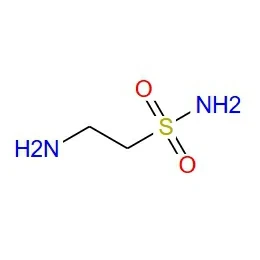
Hey everyone, so here’s the thing: I’m a pharmaceutical intermediates supplier, and more times than I can count, I get this question from both new clients and folks I’ve worked with for years—“Are there actual international standards for pharmaceutical intermediates?” Let me cut to the chase: it’s not a straight yes or no, but it’s way less confusing than you’d think once you dig past the jargon. First off, let’s make sure we’re all on the same page: pharmaceutical intermediates (or just “pharma intermediates” for short) are the mid-stage chemicals you make along the way to a final drug. You don’t dose people with them—they’re the building blocks, like the frame of a house before you add the drywall and paint. So why do standards even matter here? If your intermediate is dirty, or made with sketchy processes, it can mess up the final drug’s safety, efficacy, or even get it rejected by regulators. That’s the big red line for everyone, from small biotechs to big pharma. Pharmaceutical Intermediates
Now, let’s talk international standards. A lot of people mix up “guidelines” with “standards,” and I get why—they sound interchangeable. But for pharma intermediates, there’s no single global rulebook, mostly because different regions have their own regulators, and they’ve aligned a lot on key stuff through groups that work across borders. The main player here is ICH—International Council for Harmonisation of Technical Requirements for Pharmaceuticals for Human Use. Yeah, I used the acronym, that’s how we say it in the industry. ICH puts out guidelines that are adopted by regulators in the EU, US, Japan, Canada, and a bunch of other countries. One of their big ones is Q7, right? ICH Q7 is specifically for good manufacturing practices (GMP) for active pharmaceutical ingredients (APIs), but wait—key point here: it also covers intermediates that are used to make APIs. So if you’re an intermediate supplier, even though you’re not making the final API, ICH Q7 is the baseline a lot of us follow. That’s not a mandatory standard on its own, but if you don’t align with it, you’ll struggle to sell to any big pharma or get your intermediates into a drug that crosses borders.
Then there’s other stuff, like ISO standards. ISO is the International Organization for Standardization, and they have a few that apply here. ISO 9001 is general quality management, which every serious intermediate supplier should have, no question. But there’s also ISO 13485, wait—no, that’s more for medical devices. For intermediates, ISO 22000? No, that’s food safety. Wait, actually ISO has a specific series for chemicals, ISO 14001 for environmental management, which is big because pharma intermediates manufacturing uses a lot of chemicals and has waste to handle. Oh, and there’s ISO/IEC 17025 for testing labs—we use that for our in-house quality control, so our test results are credible no matter where a client is from. But again, these are management system standards, not strict “this chemical must be 99.5% pure” rules.
Wait, let’s get to the nitty-gritty that matters to suppliers like me. Let’s say a client asks for an intermediate that’s going into a generic on the US market. They’ll expect us to follow ICH Q7, because the FDA (US regulator) references ICH guidelines all the time. If it’s for a drug in the EU, the EMA (European Medicines Agency) does the same. But what about smaller markets? Like, a client in Brazil or India? A lot of them will accept ICH-aligned docs too, because it’s easier than building their own standards from scratch. But here’s the catch: ICH Q7 is vague on a lot of intermediate-specific stuff. For example, it says you need to control impurities, but it doesn’t tell you exactly what limits to set for every possible impurity. That’s where we, as suppliers, have to fill in the gaps by either following industry consensus (like from groups like the Pharmaceutical Quality Group, or PQG) or working directly with our clients to match their specific requirements. And honestly, that’s where the good suppliers separate themselves from the ones cutting corners. If you just follow the minimum ICH rules without validating your processes, you’re going to get rejected sooner or later.
I’ve seen this first-hand. A few years back, I worked with a small biotech that was testing a new drug for rare diseases. They had a super tight timeline, so they tried a cut-rate intermediate supplier who said they met “international standards.” When we did our independent testing, we found that one impurity was just under the limit that the ICH Q7 guideline recommends for that type of intermediate—turns out the cheap supplier didn’t have the right testing equipment to catch it. We ended up switching to a more rigorous process, and the biotech’s drug went on to get FDA approval. That’s not just a money thing; that’s a patient thing. If that impurity had made it into the final drug, who knows what could’ve happened. So even if there’s no single international “certified” standard for intermediates, following the aligned guidelines from ICH, plus having your own quality systems that stack up, is non-negotiable.
Wait, let’s address the elephant in the room: are there any actual mandatory international standards? No, not for intermediates specifically. Every country has its own set of rules, but they’re all converging on the ICH stuff. For example, the FDA has its own GMP regulations (21 CFR Part 211) which is almost identical to ICH Q7 when it comes to intermediates. The EMA has GMP guidelines that also line up. So it’s less “international standard” and more “global alignment of standards” thanks to ICH. That’s a key distinction. A lot of new people in the industry get tripped up here—they think there’s one stamp you can put on your product, like a CE mark, but it doesn’t work that way for intermediates. You have to show documentation that you’re following the relevant guidelines, and that your quality processes are consistent.
Another thing: impurity profiling. That’s a big part of intermediate standards, and it’s where ISO and ICH overlap a lot. ICH has guidelines on what qualifies as a “threshold” for impurities—like, any impurity above 0.1% has to be identified and tested for safety. That’s a rule we follow every single day. If we make an intermediate with a new process, we have to do a full impurity profile, send it to our client, and usually get it approved by their regulatory team before we can ship. No cutting corners here. And that’s not just a recommendation—it’s expected by every major regulator, so it’s basically the closest thing to an international standard we have for intermediates.
Now, let’s talk about what this means for us as suppliers. We don’t just check a box and call it a day. We have a full quality team that works with regulatory affairs to make sure every batch we make complies with ICH Q7, our ISO 9001 certification, and any specific requirements our client has. For example, if a client is making a drug for a pediatric indication, they might ask us to lower the impurity thresholds beyond what ICH recommends, because kids are more sensitive to chemicals. We adjust our processes to meet that, no extra charge, because that’s just part of the job.
I should also mention that there are some regional standards that are worth noting, even if they’re not global. For example, Japan’s JP (Japanese Pharmacopoeia) has standards for many intermediates, and they line up almost exactly with ICH, so again, that’s alignment, not a new standard. The US Pharmacopoeia (USP) has monographs for some intermediates, which are specific specifications for purity, identity, and testing. A lot of suppliers, including us, follow USP monographs where they exist, because they’re widely recognized. So even if there’s no global standard, these pharmacopeias act as a common reference point across countries.
Wait, let’s make sure I’m not downplaying the gaps. There are still a lot of intermediates that don’t have a USP monograph, or specific ICH guidelines for their use case. That’s where communication between supplier and client is key. If a client tells us their intermediate is going into a generic drug approved by the EMA, we know exactly which guidelines to follow. If it’s a research chemical for a university lab testing a new compound, we can relax a bit, but still keep quality high. Because even research intermediates can turn into commercial drugs one day, so we never skip important testing.
I’ve had so many clients say to me, “I wish there was a single international standard so I didn’t have to rewrite my documentation every time I switch suppliers.” I get that—it would make life easier. But the way things are now, the alignment across ICH, USP, and regional regulators is the best we’ve got, and it’s way better than it was 20 years ago. When I first got into this industry, every country had totally different rules, and it was a nightmare to ship intermediates between Europe and the US. Now, with ICH, it’s way more straightforward.
Let me also touch on enforcement. It’s one thing to have guidelines, it’s another to actually follow them. As a supplier, we get audited all the time—by clients, by regulatory bodies, by third-party auditors. If we skip a step in our process, or if our testing is shoddy, we get flagged, and we could lose clients, or even face regulatory action. That’s a big motivator. It’s not just about checking boxes; it’s about keeping our clients’ drugs safe, and keeping our own business trustworthy.
So to circle back to the original question: are there any international standards for pharmaceutical intermediates? The answer is, not a single, universal one, but there’s a global framework of aligned guidelines, pharmacopeial references, and management system standards that act as the de facto rules. For suppliers like me, that means we have to stay up to date on ICH updates, maintain our ISO certifications, work closely with clients, and never cut corners on quality. Because at the end of the day, our intermediates are the foundation of drugs that help people, whether that’s a cancer treatment, a diabetes drug, or something for a rare disease. If we mess up the foundation, the whole thing falls apart.
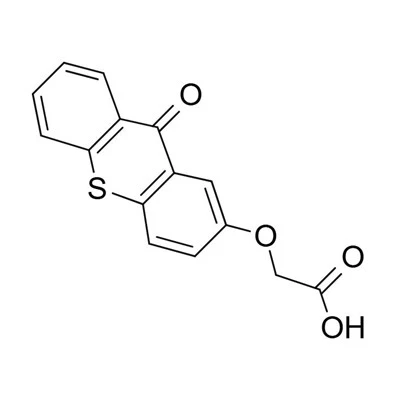
Now, if you’re a pharma professional looking for a reliable intermediate supplier, someone who gets how important compliance and quality are, and who works with you to meet your specific needs—reach out. We’re here to walk you through our processes, share our quality docs, and make sure you get exactly what you need, every single time. No jargon, no runaround, just straight talk and solid chemicals.
Chemical Reagents References:
- International Council for Harmonisation of Technical Requirements for Pharmaceuticals for Human Use (ICH). ICH Q7: Good Manufacturing Practice Guide for Active Pharmaceutical Ingredients.
- International Organization for Standardization (ISO). ISO 9001: Quality Management Systems Requirements.
- U.S. Food and Drug Administration (FDA). 21 CFR Part 211: Current Good Manufacturing Practice for Finished Pharmaceuticals.
- European Medicines Agency (EMA). GMP Guidelines for Medicinal Products for Human Use.
- United States Pharmacopeia (USP). General Chapter <1042>: Pharmaceutical Compounding – Nonsterile Preparations.
Henan Vistar Biomedical Co., Ltd.
As one of the most professional pharmaceutical intermediates manufacturers in China, we have world-leading production equipment and strong manufacturing capabilities. Please feel free to buy bulk premium pharmaceutical intermediates at competitive price from our factory.
Address: Zhengzhou Linkong Yunchuang Industrial Park, Aviation Port District, Zhengzhou, Henan, China
E-mail: sale08@alfachem.cn
WebSite: https://www.vistar-chem.com/
