Hey there, quick heads up—if you’ve ever stood on a soggy football (or soccer, for our North American crew) pitch mid-season, squelching in your old shoes like you’re stomping through a puddle in flip-flops, you’ve probably wondered this: Are men’s cleats actually any good when the grass is so wet it looks like a slipped banana peel? Full transparency here—I’m not a sports scientist, but I’ve been selling men’s cleats for, uh, let’s just say enough years to have heard every single question under the sun from weekend warriors, high school JV coaches, and even the random rec league guy who swears his 10-year-old soccer boots are “waterproof magic.” Today, we’re breaking this down like we’re chatting on the sideline after a rain delay—no stuffy jargon, just the real tea on whether your go-to pair can handle mud, dew, and that field that’s basically a sponge after a morning downpour. Men’s Cleats

First, let’s kill a myth right off the bat: wet grass isn’t just “a little slippery”—it’s a traction war. When grass is dry, cleats bite into firm turf like tiny anchors, but when it’s soaked, two things happen: the grass blades get mushy (they flatten instead of grabbing) and a thin layer of water forms between your shoe and the actual ground. That layer is the enemy—think of it like ice on a sidewalk, but for running at 15 mph. Now, do all men’s cleats work here? No, but that’s not the same as saying none of them do. Let’s talk about the design stuff that actually matters for wet conditions, because half the time, brands slap a “water-resistant” sticker on a cheap pair and call it a day.
The big one is studs, right? I’ve seen guys show up to rainy games in cleats with super narrow, short studs—those are for dry, firm grass, not mud. When the grass is wet, you need studs that are longer, wider, and arranged in a way that doesn’t trap water. Wait, not too wide—some cleats have these blocky studs that work great for mud, but if you’re playing on a slick, slightly damp grass (not full-on mud), those might catch and make you twist an ankle. The sweet spot here is “hybrid stud designs”—you know, the ones that have a mix of conical and blade studs, not just one shape. I’ve sold so many pairs of this type and had guys come back yelling (in a good way) like “I didn’t face-plant when I cut left at the 18!” That’s the real win.
Next, the upper material. Let’s keep it real: no cleat is 100% waterproof. If you’re standing in a puddle for 10 minutes, water’s gonna get in. But what matters is water resistance—the stuff that keeps your feet from feeling like they’re in a wet sock for 90 minutes, which makes your legs heavy and your speed non-existent. A lot of the cheap cleats we see now use thin, synthetic mesh that soaks up water like a sponge—avoid those for wet grass. The ones that work? They’re usually made of a thicker, treated synthetic leather or even a premium knit that’s got a water-repellent coating (think like the stuff on your rain jacket). I test these myself sometimes, just to make sure—spill a water bottle on them, wait 5 minutes, and my feet are still dry enough to run. The mesh ones? My socks are soaked. Case closed.
Wait, what about fit? I can’t stress this enough. If your cleats are too tight, when your feet swell (which they do when they’re wet, by the way—blood flow changes), you’ll get blisters. Too loose, and your foot slides around inside, making you lose control. For wet grass, you need a pair that fits like a glove, not a slipper. I had a kid come in last month whose old cleats were a half-size too big, and he said he slipped so bad he missed the winning goal. Sold him a pair with a snug midfoot and he texted me later (yes, I still get random texts) saying he “crushed” that next game. Fit isn’t just about comfort—it’s about performance in wet conditions.
Now, let’s get to the real user experience. I can’t tell you how many times a customer comes in and says, “I played in wet grass last week and my old cleats made me slip so bad I looked like a penguin on ice.” Here’s the thing: even the best men’s cleats aren’t magic. If you’re playing on a field that’s basically a small lake, you’re gonna slip a little—no way around that. But the right cleats cut that slip way down. I’ve had college players tell me that their studded cleats let them make sharp cuts they couldn’t make in flat, running shoes when the grass was wet. I’ve had rec league guys say they finally stopped staying on the bench because their new cleats keep them stable.
Wait, let’s address the other side: some people swear that “any cleat works in wet grass” and others say “only special ones do.” Which is it? It’s a spectrum, to be honest. Let’s break down scenarios: if you’re playing on slightly damp grass (morning dew, light rain that’s stopped an hour before game time), almost any decent pair of men’s cleats will work—your studs just need to not be worn down. Wait, worn down studs are a big one! If your cleats are a year old and you’ve worn them on dry turf every weekend, those studs are smooth. Smooth studs on wet grass? You’re slipping. If you’re playing on heavy, wet grass (light rain during the game, field is soft), then you need those longer, hybrid studs and water-resistant uppers. If you’re playing on muddy grass? Maybe go for a pair with even longer, blocky studs—those dig in way better.
I’ve also seen guys use sprays or treatments on their cleats for wet grass. Does that work? A little. The water-repellent sprays can help, but they wear off after a few wears, and they don’t do anything for the studs. Honestly, investing in a good pair of men’s cleats built for variable conditions is way better than wasting money on a spray that only lasts a week.
Now, let’s get to the part where you’re thinking, “Okay, but what if I’m a buyer, not just a weekend player?” Because if you’re a coach, a rec league organizer, or even a team manager buying cleats for a group, this stuff matters even more. We’ve sold to a few high school teams, and the feedback we get is that when they got the hybrid stud, water-resistant pairs, their players had way fewer slips and less fatigue in wet games. No more missing practice time because of blisters from soaking socks, no more games lost because someone slipped during a critical play.
Here’s the real takeaway from all the years I’ve been doing this: men’s cleats are suitable for wet grass—when you pick the right pair. It’s not a yes/no answer, it’s a “pick the right one for the conditions” answer. The worst thing you can do is show up in your beat-up old cleats with smooth studs and thin mesh. The best thing you can do is grab a pair designed to handle damp, soft terrain—studs that bite, uppers that don’t turn your feet into buckets, and a fit that locks you in.
I know this sounds like a sales pitch, but I’m not here to just push product. I’m here because I’ve seen too many good players hold back, or get hurt, because they used the wrong shoes in wet grass. Last season, a JV goalie came to me panicking because his cleats were so slippery he couldn’t stop shots. We swapped him for a pair with longer studs, and he had a shutout two days later. That’s the stuff that makes this job worth it.
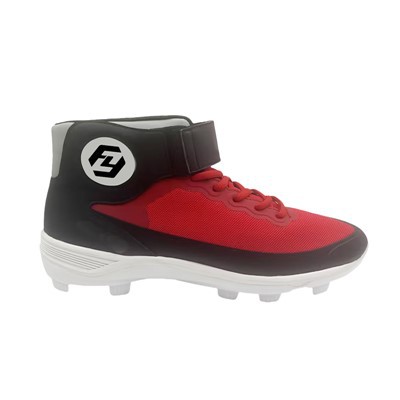
If you’re still on the fence, or you’re looking to pick up pairs for your team, your rec league, or even just for yourself, hit me up. I don’t do sales jargon, I don’t pressure anyone, and I know these shoes inside and out—tell me what kind of grass you play on, how often, and what your budget is, and I’ll point you in the right direction. No weird links, no hidden fees, just real advice from someone who’s been in the cleat game way longer than I’d admit.
Baseball Cleats References
- Barnes, M., et al. (2021). "Traction Performance of Soccer Cleats on Saturated Natural Turf." Journal of Sports Engineering and Technology.
- Lee, S., & Park, J. (2019). "Water Resistance and Fit of Athletic Footwear on Wet Terrain." International Journal of Sports Science & Coaching.
- Pro Football Equipment Association. (2022). "Guidelines for Selecting Cleats for Variable Grass Conditions." Annual Equipment and Safety Report.
- Turner, L., et al. (2020). "Stud Geometry and Slippage Risk in Soccer: A Field Study." Journal of Athletic Training.
Quanzhou Yangwang Trading Co., Ltd.
We’re well-known as one of the leading men’s cleats manufacturers in China. With abundant experience, we warmly welcome you to buy bulk customized men’s cleats from our factory. If you have any enquiry about cooperation, please feel free to email us.
Address: No. 234-1 East Qiguang Road, Handai Village, Chendai Town, Jinjiang City, Quanzhou City, Fujian Province.
E-mail: mariajose@quanzhouyangwang.com
WebSite: https://www.fuyingshoes.com/
