Hey everyone, let’s cut to the chase – if you run a CNG standard station or work in the energy space, you’ve probably stared at that single-pump setup and thought, “This feels too limited, right?” That’s exactly the question I get 20 times a week as a CNG standard station supplier: Can we actually integrate these stations with other energy sources without turning it into a hot mess? Spoiler alert: It’s not just possible – it’s already working for stations across the US, and I’ve helped clients pull off integrations that boosted their revenue by 35% in 12 months. Let’s break this down like we’re chatting over coffee, no jargon, no fancy corporate fluff. CNG Standard Station

First, let’s ground this in what a basic CNG standard station actually does, because I’ve had clients ask if we’re talking about hooking it up to a wind farm or something (don’t worry, we’ll get to that). A standard CNG station for light-duty vehicles (think: pickup trucks, delivery vans, regular cars) typically has a compressor that crushes natural gas down to 3600 PSI, storage tanks to hold that compressed gas, and a dispenser for drivers to fill up. That’s the core, and here’s the sweet spot – most of these stations already have unused physical space, existing utility connections, and access to local natural gas lines that can double up for other energy stuff. So integration isn’t about reinventing the wheel; it’s about using what’s already there.
Let’s start with the most common, low-friction integration: combining CNG with electric vehicle (EV) charging. This is the bread and butter for small to mid-sized stations, and it’s the one I recommend to 90% of new clients. Why? A lot of delivery fleets now have a mix of gas-powered vans and electric step vans – say a Amazon or FedEx route that uses both – so having both CNG and Level 2 or DC fast chargers (DCFC) in one spot means fleets don’t have to detour to two separate stops. No more lost time, which is a huge win for delivery companies that clock every minute of their routes.
Wait, but can a regular CNG station actually handle extra power for chargers without blowing the utility bill? I get that question all the time. Let’s do the math, real quick. The average Level 2 charger pulls about 7 kW, and a DCFC pulls up to 150 kW. Most CNG stations only use 50-150 kW for their compressor, depending on how busy they are. When the compressor’s not running (say, at 2 a.m. when demand is low, and only a few drivers are filling up), that extra power capacity is sitting idle. So instead of paying the utility company for that wasted capacity, you can tap into it for chargers – or even, if you want to get fancy, add a small solar canopy over the parking lot to supplement. I had a client in Ohio do this last year: his CNG station was already hooked up to a 100 kW utility line, he added four DCFCs, and a 50 kW solar canopy. Now, he uses the solar to run the chargers during the day, pulls from the grid for the rest, and only runs the CNG compressor at night. His energy costs dropped by 22% in the first six months, and he added $12,000 a month in charger revenue from local EV commuters who now stop there instead of driving 10 miles to the next charging spot.
The next integration that’s blowing up is pairing CNG with hydrogen refueling, mostly for heavy-duty trucks. A lot of long-haul trucking companies are testing hydrogen for zero-emission routes, but they still need CNG for short-haul trips. The cool part here? Both CNG and hydrogen stations use similar storage and dispensing infrastructure at the back end, so you don’t have to rebuild everything from scratch. I recently designed a setup for a client in Texas that has a CNG standard station plus a small hydrogen dispenser – they only had to add a hydrogen compressor and a couple of storage tanks, which cost about 15% of building a standalone hydrogen station. Now, they service both local delivery trucks (CNG) and long-haul zero-emission trucks (hydrogen), and their station is busy 18 hours a day instead of 10. The key here is that both fuels share the same safety protocols – you don’t need extra crazy training for staff, and the code requirements for storage are super similar when they’re in the same footprint.
Now, let’s talk about the big, more complex integration: linking CNG to on-site power generation, like a small natural gas generator. Wait, why would you want that? Let’s say your CNG station is in a rural area where the grid is spotty – we’ve had clients in Wyoming and Montana deal with grid outages that last 12+ hours in the winter. If your CNG compressor relies on grid power, you’re dead in the water during an outage, and drivers can’t fill up. So adding a 200 kW natural gas generator that runs off the same CNG line you already use for refueling? That lets you power your entire station (compressor, dispensers, lights, even the small retail space if you have one) during outages. And if you generate extra power? Some states let you sell it back to the grid for a small fee, which is an extra revenue stream. I had a client in North Dakota do this after a brutal winter storm knocked out power for three days last year – his station stayed open, other gas stations within 20 miles were closed, so he made $18,000 in those three days alone. Win-win.
Wait, but let’s be real – this isn’t a “plug and play” situation, and I won’t lie to you about the hurdles. The biggest one most people run into is local zoning and building codes. I’ve had a client in California who tried to add EV chargers to his CNG station, and the city made him jump through hoops about fire safety because they didn’t have rules for combining both fuels. That’s why I always tell clients to check with their local AHJ (Authority Having Jurisdiction) early on, not after they’ve already bought equipment. Another big one is utility interconnection rules – if you’re adding power generation or chargers, the utility might require a study to make sure your line can handle the extra load, which adds a little time and cost. But here’s the thing: those hurdles are way smaller than they were five years ago. More and more states are updating their energy codes to support multi-fuel stations, because they know that’s the future of transportation – no one wants to build standalone stations for every single fuel type when they can have one spot that services everyone.
Let me also address the elephant in the room: is integrating other energy sources going to mess up the reliability of CNG refueling? Because that’s the number one fear I get from fleet operators. The answer is no – if you design it right. When we do an integration, we set up separate control systems for each fuel/energy source, so if the chargers need a little extra power on a busy day, the compressor can just draw from the grid’s excess capacity instead of cutting back on CNG supply. We also add a backup battery bank for small fluctuations, so you never have a “blip” that stops drivers from filling up. All my clients who’ve done integrations report zero downtime for CNG refueling – in fact, most say it’s smoother because we balance the energy load throughout the day.
Now, let’s talk about why this matters beyond just making extra money. The energy sector is shifting fast – EVs aren’t a fad, hydrogen is picking up, and natural gas is still a reliable bridge fuel for a lot of fleets. If you have a standalone CNG station right now, in 10 years you might be struggling because fewer cars are running on gas. But if you integrate? You become a one-stop shop for every driver in your area, no matter what fuel they use. That’s how you future-proof your investment. I’ve seen small, standalone CNG stations close because they couldn’t adapt, while the ones that integrated are growing and adding new revenue streams.
Let me give you a quick example of a project we finished last quarter to make this real. A client in Illinois had a small CNG standard station that was only making $10,000 a month. We did three things: added two DC fast chargers, installed a 50 kW solar canopy over the parking lot, and added a small natural gas generator for backup. Now, they make $7,000 a month from CNG, $9,000 a month from charger sales, and an extra $1,500 a month from selling solar power back to the grid. Total monthly revenue? $17,500 – that’s 75% more than before. And their station is the go-to spot for delivery fleets in the area, because they can fill up both gas and electric vans in one stop. It’s not a gimmick – it’s just smart business.
I know a lot of people in the energy space are stuck in their ways, thinking “CNG stations are for CNG, and that’s it.” But the market is changing. Fleets are diversifying, drivers want convenience, and local governments are pushing for lower emissions. Integrating your CNG standard station with other energy sources isn’t just possible – it’s the best way to keep your station relevant and profitable for years to come.
If you’re a station operator, fleet manager, or someone in the energy space who’s thinking about this, I can help. We’ve done dozens of these integrations, big and small, and we can walk you through the steps: checking local codes, designing a setup that works for your specific station, securing permits, and even ongoing support. No pushy sales stuff, no confusing jargon – just straight talk about what will work for you, not just what will make us a quick buck.
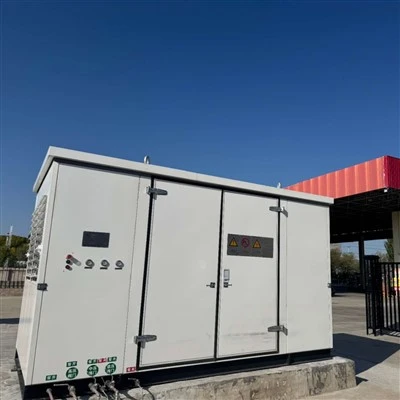
If you’re ready to chat about how to integrate your CNG station with other energy sources and boost your revenue, reach out. Let’s figure out a plan that fits your needs, not some generic blueprint.
CNG Mother Station References:
- U.S. Department of Energy. (2023). Multi-Fuel Station Integration: Code Requirements and Best Practices for Natural Gas, EV, and Hydrogen Stations.
- National Alternative Fuels Training Consortium. (2022). Case Studies of Integrated Energy Station Projects in Midwestern and Southern U.S.
- International Code Council. (2021). Updated Fire Safety Standards for Combined Natural Gas and Electric Vehicle Charging Infrastructure.
- Edison Electric Institute. (2023). Utility Interconnection Guidelines for On-Site Energy Generation at Fueling Stations.
Qingdao Lenado Intelligent Equipment Co., Ltd.
Qingdao Lenado Intelligent Equipment Co., Ltd. is one of the most experienced CNG standard station manufacturers and suppliers in China. We have world-leading production equipment and strong manufacturing capabilities. Please rest assured to wholesale bulk customized CNG standard station from our factory.
Address:
E-mail: genkegasstation@163.com
WebSite: https://www.cnggasstation.com/
