Hey there! If you’ve ever wandered into a lab, a dentist’s chair, a photography studio, or even a grocery store’s produce section, you’ve probably used an LED cold light source without even realizing it. As someone who’s been in the LED cold light source supply game for the past 8 years, I’ve seen how these little powerhouses have replaced old, bulky, heat-heavy lighting options across every industry you can think of. A lot of folks reach out to me asking “wait, aren’t all LEDs the same?” Nope—cold light sources (the ones that produce barely any heat, unlike incandescents that feel like mini space heaters) have distinct types tailored for totally different jobs. Let’s break down the main ones, how they’re used, and why picking the right type matters way more than you’d think. LED Cold Light Source

First, let’s get one tiny (super important) clarification out of the way: LED cold light sources aren’t “cold” because they’re turned off or have zero heat output—they’re called that because they convert almost all their energy into visible light, not infrared (that’s the stuff that creates heat). Old incandescents only convert about 5% of energy to light; the rest is just heat. So if you’ve ever sat under a dentist’s light that didn’t make your forehead sweat, or a microscope light that didn’t warm up your slide, that’s an LED cold light source. Got it? Good, let’s dive into the types.
First up, and probably the most common one people run into daily: General-Purpose White LED Cold Light Sources. Yeah, I know, that sounds basic, but it’s the backbone of our industry and the one you’ll see everywhere from office ceilings to phone flashlights, wait—wait, no, phone flashlights are mostly regular, but these are the ones engineered specifically for cold, consistent output. A lot of my clients come to me for these because they need something that doesn’t mess up temperature-sensitive stuff. Like, for example, produce departments? If you’ve ever seen a banana go brown too fast near a warm light, that’s because heat speeds up ripening. Our general white LED cold lights run at a stable 30-40°C max (way cooler than a lightbulb that hits 150°C) so they keep produce fresh longer. Also, dentists use these too—wait, actually, let’s not mix types, but this type is perfect because it doesn’t make patients uncomfortable mid-cleaning, no sweaty brows mid-root canal. The cool thing about these is you can tweak their color temperature: 2700K is warm, like old incandescents, 5000K is bright daylight, which is perfect for offices where you don’t want that “yellow tired” feeling by 3pm. I tell new clients: if you just need reliable, low-heat white light for everyday commercial or residential use, this is your go-to. No frills, no surprises, just consistent cold light.
Next, a type that’s super specific and I’d argue is the workhorse for scientific and medical spaces: High-Power LED Cold Light Sources (HP LEDs). These are not your desk lamp LEDs. We’re talking 10W+, up to even 100W, engineered to pump out super bright light without overheating. Where do these live? Lab microscopes, endoscopes, surgical lights, industrial inspection equipment—places where you need enough light to see tiny details, but can’t risk heat ruining samples or materials. Let’s take endoscopes, for example. If your doctor has ever done a colonoscopy or a cystoscopy, that tiny camera tube uses a HP LED cold light source at its tip. If that light was hot, imagine how uncomfortable that would be, not to mention it could damage delicate tissue. Or take semiconductor manufacturing—inspecting microchips at the nanoscale? You need light bright enough to pick up a tiny scratch, but not so hot it warps the silicon wafer. That’s exactly what these HP LEDs do. Another big use case: stage lighting? Wait, some stage designers used to use PAR cans that burned through gels, but now they’re switching to these because they don’t heat up the stage, so performers don’t overheat mid-show. I had a client last year who runs a Broadway theater switch all their stage lights to our HP cold LEDs; they cut their AC costs by 22% in six months and no longer have to replace burnt-out gels every week. Win-win, if you ask me. A quick note here: these do have tiny heat sinks (we can’t make them totally heat-free, obviously) but they’re engineered to dissipate heat away from the light-emitting area, so the actual light surface stays cold to the touch. That’s the key difference between these and regular LEDs.
Third type, and one that’s grown a ton in the last decade because of digital content: RGB LED Cold Light Sources. No, this isn’t just the colorful string lights you put up for Christmas (though those are technically related, but not the industrial-grade version). These are cold light sources that mix red, green, and blue LEDs to create almost any color in the visible spectrum, all while staying cold. Where are these used? Photography and videography are huge. If you’ve ever seen a filmmaker using a ring light or a panel light that can shift from cool blue to warm orange to match a room’s vibe, that’s RGB LED cold light. The reason they’re cold is because they don’t emit that excess infrared, so when you’re filming a model, their makeup doesn’t melt, or a set doesn’t warp under hours of heat. Also, textile manufacturing—sorting colored fabrics requires precise color temperature, so these lights can be calibrated to exact shades, no heat-induced color fading. I had a fashion brand client a few months back who was using old halogen lights for their quality control; the heat was making their silk scarves fade after just a few weeks of sorting. Switched to our RGB cold LEDs, and now their color accuracy is 98% and no more fade issues. Another fun use: art galleries! Gallery lights can’t damage paintings or sculptures, so RGB cold LEDs let curators adjust the lighting to highlight different parts of a piece without risking heat damage to the art. Way better than old fluorescent lights that got hot and caused fading over time.
Fourth, and maybe the most niche but super important for industrial and aerospace: UV LED Cold Light Sources. Wait, UV is ultraviolet, right? And these are cold? Yep! Because traditional UV lights (like mercury vapor bulbs) pump out tons of heat along with UV, which is terrible for things like curing adhesives, sterilizing medical tools, or even detecting counterfeit money. UV LED cold lights convert almost all their energy into UVA, UVB, or UVC, with barely any heat. Let’s break down uses: medical sterilization—hospitals use UVC UV cold LEDs to sanitize surgical tools, operating rooms, even air in patient rooms, because the heat from old UV bulbs could warm up sensitive tools or make surfaces too hot to touch. Also, 3D printing—UV curing resin 3D printers use these to harden the liquid resin layer by layer. If the light was hot, the resin would warp, ruining the print. Aerospace is another big one: testing materials for satellite components, because you need to simulate space UV radiation (which is intense) but without adding heat that would mess up the material’s performance in orbit. I also work with a water treatment company that uses our UV cold LEDs to disinfect drinking water; no chemicals, no heat, just UV that kills bacteria. Way better than old systems that used heat to sterilize, which wasted tons of energy. Quick safety note: UV can be harmful if not handled right, but when engineered as a cold light source, the low surface heat means you don’t have to worry about burns, just basic eye protection like with any UV source.
Wait, I should also touch on infrared LED Cold Light Sources? Wait, hold on—sometimes people lump IR with cold light, right? Because unlike regular IR heaters, these don’t emit enough heat to be a hazard. These are used in night vision, remote controls, and even medical imaging (like thermal cameras, though wait no—thermal cameras detect IR, but the source is cold IR LED). Yeah, these are less common in consumer spaces, but super important for defense and security. Like, night vision goggles use IR cold LEDs to illuminate targets in total darkness without visible light, so you don’t give away your position. That’s a whole other niche, but worth mentioning because people often forget that cold light sources cover more than just visible light.
Now, I get it—if you’re not an engineer or someone in a specialized industry, some of this might feel a bit granular. But here’s the thing: picking the wrong LED cold light source can cost you big time. Whether you’re a café owner trying to keep pastries fresh, a lab tech trying to get clear microscope images, or a filmmaker trying to shoot a perfect scene, the type of LED cold light you use directly impacts your results, your costs, and even the lifespan of your materials. Over the years, I’ve had so many clients come to me after buying cheap, generic LEDs that overheat, fade their products, or burn out in six months. Our team tests every single type we supply to make sure they meet low-heat standards, so you don’t have to deal with those headaches.
Let me wrap this up quick. The main types of LED cold light sources are: general-purpose white for everyday use, high-power for scientific/medical/industrial bright light needs, RGB for color-specific applications like photography and art, and UV for sterilization/curing. Each is built for a specific job, and none of them feel hot to the touch when in use.
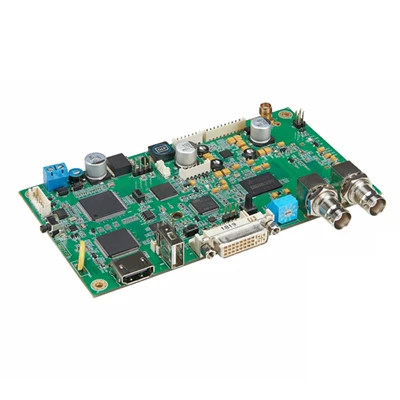
If you’re shopping for LED cold light sources and aren’t sure which type fits your needs—whether you’re a small business owner, a big corporation, a lab, or anything in between—hit us up to chat through your project. We can help you pick the right one, tailor specs if needed, and make sure you get a product that doesn’t cut corners on quality. No pushy sales talk, just real advice from people who’ve been in this game for years.
Endoscope Monitor References
- American National Standards Institute (ANSI) Requirements for LED Medical Lighting, 2021
- International Commission on Illumination (CIE) Report on Cold Light Sources for Industrial Applications, 2019
- Journal of Biomedical Optics, “Performance of High-Power LED Cold Light Sources in Endoscopic Procedures”, 2020
- U.S. Environmental Protection Agency (EPA) Energy Star Guidelines for LED Lighting, 2022
- Textile Research Journal, “Color Accuracy Testing of RGB LED Cold Light Sources for Quality Control”, 2021
Shenzhen INNOP Medical Instruments Co., Ltd.
With abundant experience, we are one of the leading manufacturers and suppliers of led cold light source in China. Please feel free to buy advanced led cold light source in stock here from our factory. We also accept customized orders.
Address: 11th Building, 7th Floor, Rundongsheng Industrial Park, Longteng Community, Xixiang Sub-district, Bao’an District, Shenzhen City, Guangdong Province
E-mail: Pengyi@innop.cn
WebSite: https://www.innopmedical.com/
