If you’ve ever worked in a lab, you know every piece of equipment, every reagent bottle, and every bench surface isn’t just a workspace—they’re part of a chain of accountability. For a lab casework supplier like me, traceability isn’t just a buzzword; it’s the backbone of trust between our team and the researchers, quality control managers, and facility leaders who rely on us. Traceability in lab casework means being able to follow every detail of a casework unit from the moment we source raw materials to the day it’s installed, calibrated, and supported in a lab. It ensures that if there’s ever a question about a material’s durability, a weld’s integrity, or a finish’s resistance to chemicals, we can track exactly where that component came from, who processed it, and when. Let’s break down what real, working traceability looks like for our casework, because I’ve spent 12 years on the floor—hand-selecting materials, auditing fabricators, and troubleshooting installations—and I can tell you it’s not just about paperwork; it’s about protecting the work that happens behind those lab doors. Lab Casework

First, traceability starts with raw material sourcing, and this is where we draw a line in the sand. Lab casework is built to withstand concentrated acids, bases, repeated sterilization, and years of heavy use, so the materials can’t be generic. For example, when we order phenolic resin core panels, solid epoxy countertops, or stainless steel for fume hood casings, we don’t just take the supplier’s word for it. Every shipment has to come with a Certificate of Analysis (CoA) that lists the material’s grade, batch number, and test results for key properties—like the chemical resistance rating of phenolic, or the grain size of stainless steel to ensure it doesn’t stain or scratch easily. Last year, we had a client in a pharmaceutical quality control lab that required 316L stainless steel for their casework because of repeated exposure to hydrochloric acid. When the delivery came, our team cross-checked the CoA with the steel mill’s traceability number—something each metal slab has etched into its edge—confirmed it matched our order, and even sent a small sample to an independent lab to verify corrosion resistance. That’s not overkill; that’s traceability in action. If we skip this step, we could end up with 30 panels of inferior steel, and a lab that has to shut down for repairs 18 months down the line. For us, every raw material batch is tagged with a unique identifier that stays with it through every step of production, so we never have to guess where a component came from.
Next, production and fabrication traceability. Once raw materials are in our warehouse, each batch is assigned a unique SKU that links to its source documentation. When a fabricator cuts a phenolic panel to size, welds a stainless steel frame, or applies a chemical-resistant epoxy finish, that unique SKU is marked directly on the component with a durable, chemical-resistant label—we use laser etching for metal parts and vinyl labels that don’t peel or fade even after months of exposure to ethanol and bleach. We also log every step in our internal traceability system: who cut the panel, what tools were used, when it was finished, and who inspected it for defects. Last quarter, a client noticed a small chip on the edge of a fume hood base we installed six months prior. Instead of sifting through piles of installation records, we pulled the component’s SKU, looked up our production logs, and found that it had been cut on a different machine than the standard ones. We checked that machine’s calibration records (which are also tied to the component’s SKU) and confirmed that it had been calibrated the week before the part was made. We then sent a repair team out the next day, with a pre-matched epoxy that came from the same batch we used for that unit, because our traceability system told us exactly what finish was applied. That’s the kind of efficiency that comes from good traceability—no guesswork, no delays, just accountability.
One area that’s often overlooked in lab casework traceability is installation and commissioning. A casework unit is only as good as its installation, and many issues that come up post-install are due to how the unit is anchored, leveled, or connected to utility lines (like gas or vacuum for fume hoods). That’s why our team logs every detail of the installation for every unit: the date it was installed, the team lead who oversaw it, the level of the unit across all four corners, the type of anchors used (critical for seismic safety in labs), and test results for utility connections. Last year, we had a client in a university biology lab that was undergoing seismic retrofits and needed to confirm all casework was properly anchored. Instead of having to tear down every unit to check, we provided them with a digital link (stored in our traceability portal) for each unit that included installation photos, anchor type, and level readings. We even included a record of the seismic load testing we did for our anchor kits, so the client’s engineering team could verify compliance without extra work. This part of traceability is key because it links the finished product to its real-world performance—so when labs update their facilities or face regulatory audits, they don’t have to start from scratch to prove their casework is safe and compliant.
Regulatory compliance is another non-negotiable requirement for traceability in lab casework. Many labs operate under strict industry regulations: pharmaceutical labs follow FDA 21 CFR Part 11, clinical labs comply with CLIA, and research labs working with hazardous materials have to meet OSHA and NFPA 45 standards. All of these regulations require that every piece of equipment, including casework, is traceable to ensure it meets safety and quality standards. For example, FDA 21 CFR Part 11 requires that all records related to lab equipment are secure, unalterable, and accessible for audits. Our traceability system is designed specifically to meet this: every log entry (from raw material CoAs to installation tests) is time-stamped, password-protected, and can’t be edited—only added to if there’s a correction, with a clear audit trail of who made the change. Last year, we worked with a biotech client that was preparing for a FDA audit of their new manufacturing lab. Their auditor asked to see traceability records for all 20 linear feet of casework in their cell culture suite. In 10 minutes, our account manager pulled up the traceability dashboard, pulled each component’s batch number, and generated a complete report with CoAs, production logs, installation records, and calibration data. The auditor didn’t have any follow-up questions about the casework, which saved the client weeks of stress. Without this level of traceability, a lab could face costly fines or delays in getting their products to market—so for us, meeting regulatory requirements isn’t an afterthought; it’s built into every part of our traceability process.
Traceability also requires ongoing maintenance and support, because lab casework isn’t a “set it and forget it” product. Labs update their equipment every few years, replace parts when they wear out, and sometimes need to upgrade their casework to meet new lab protocols. That’s why our traceability system stays with the unit long after it’s installed. If a lab needs to replace a damaged countertop 10 years down the line, we can pull up the original unit’s records, find exactly the same material batch and finish, and fabricate a replacement that matches perfectly. We also track all maintenance and repair history for every unit, so if a lab is noticing premature wear on their casework, we can look back at past repairs, material batches, and usage records to identify the root cause. Last year, a client in a public health lab had a problem with their casework’s epoxy finish chipping faster than expected. We pulled up their unit’s traceability records, found that the epoxy batch was from a manufacturer who had a temporary formulation change that year, and were able to provide the client with a free upgrade to a newer, more durable epoxy that matched their original unit. None of this would have been possible without traceability—we couldn’t have pinpointed the issue, communicated with the manufacturer, or delivered a solution that fit seamlessly into their existing lab.
Now, let’s talk about what traceability isn’t. It’s not just a binder full of paperwork. It’s not generic labels that say “lab casework” without any specific details. It’s not a system that only works when things go right. Real traceability is a working tool—one that our team uses every day to solve problems, keep our clients compliant, and deliver high-quality casework that lasts. For example, earlier this year, we had a rush order for 10 casework units for a new diagnostic lab. Our production team noticed that one batch of steel had a slightly different traceability number than the one we usually use for 316L grade. Instead of running the risk of using the wrong material, we pulled the CoA, called the steel mill, confirmed the grade, and found it was perfect for the application. But that quick check—made possible by our traceability system—meant we avoided a mistake that would have delayed the order and cost our client thousands of dollars.
I know that when a lab is planning a new build or renovation, there’s a lot to think about: budget, layout, safety, functionality. Traceability might feel like a small detail at first, but trust me, it’s one of the most important. Because when you’re working with hazardous materials, testing drugs, or conducting life-saving research, you can’t afford to have equipment that’s untrackable. You need to know exactly what’s in your lab, where it came from, and who’s responsible if something goes wrong. For our team, that’s what we deliver: lab casework that’s not only built to last, but built to be traced.
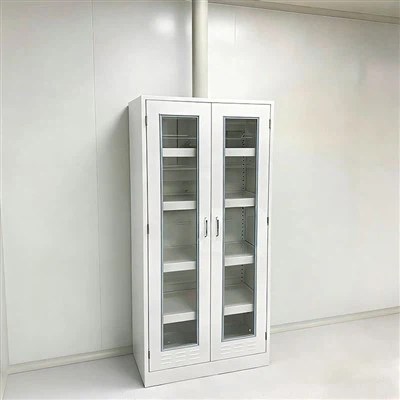
If you’re planning a lab project, whether it’s a small research space or a large pharmaceutical facility, and you want to make sure your casework has a robust, reliable traceability system in place, I’d love to connect. We can talk through your specific needs, walk you through our traceability process, and find the right casework solution that fits your lab’s requirements. Let’s build something together that you can trust, every step of the way.
Shower and Eyewash Station References:
- National Research Council. (2015). Safe Science: Promoting a Culture of Safety in Academic Chemical Research. National Academies Press.
- Occupational Safety and Health Administration (OSHA). (2022). Lab Safety Guidance for Laboratories. U.S. Department of Labor.
- U.S. Food and Drug Administration (FDA). (2023). 21 CFR Part 11: Electronic Records; Electronic Signatures.
- International Organization for Standardization (ISO). (2020). ISO 17025: General Requirements for the Competence of Testing and Calibration Laboratories.
- National Fire Protection Association (NFPA). (2021). NFPA 45: Standard on Fire Protection for Laboratories Using Chemicals.
HAMECC(Shanghai) Lab Solutions Co., Ltd.
We’re well-known as one of the leading lab casework manufacturers and suppliers in China, featured by quality products and good price. Please rest assured to buy customized lab casework made in China here from our factory.
Address: Building 1, No. 2222, Huancheng Road, Jiading District, Shanghai
E-mail: info@hamecc.com
WebSite: https://www.hamecc.com/
