If you’ve ever sat in a room that does double (or triple) duty—say, a conference space that becomes a birthday party spot after work, or a home rec room used for both home gym sessions and family movie nights—you know the struggle. One minute, you’re on a work call, straining to hear your colleague over echo, and the next, you’re yelling over music or kid chaos because the space just won’t stop bouncing sound around. That’s where I come in: I’ve been supplying wooden acoustic wall panels for almost a decade, and let me tell you, this question pops up more than any other from clients eyeing multi-purpose rooms—“Do these things actually work in a space that’s supposed to do everything?” Wooden Acoustic Wall Panel
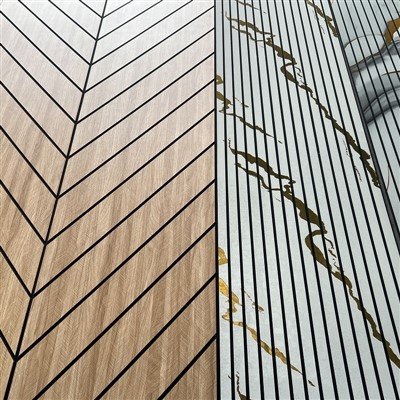
Let’s start with the basics, no fancy textbook jargon. Acoustic panels work because they absorb sound, right? Not block it—important distinction. When sound hits a hard surface like bare drywall or concrete, it bounces around (that’s echo or reverb, the fuzzy noise that makes your voice sound like it’s echoing in a gym). Wooden acoustic panels don’t just stop that bounce; they capture those sound waves and turn them into tiny bits of heat energy, which fades away. Now, multi-purpose rooms are tricky because they shift functions constantly—so their acoustic needs shift too. A room used for yoga, team meetings, and game nights doesn’t have a “one size fits all” acoustic need, which is why wooden panels are such a solid middle ground, and I’ve seen this play out firsthand with dozens of clients.
A few years back, we worked with a small community center that had a room used for preschool story time, local city council meetings, and weekend potlucks. Before we installed panels, their story time volunteers said the kids couldn’t hear them over the echo off the walls, and during council meetings, minutes had to be re-recorded because voices got so muddled. We used our standard wood acoustic panels—they’re not too thick, have a nice grain, so they look like normal wall decor, not cold sound gear. After installation? The center manager shot me a text a few weeks later saying the city council could now hear every speaker without yelling, and the preschool teachers said even the back row kids were keeping up with the story. Here’s the part most people miss: these panels didn’t make the room dead-quiet during potlucks. They just tamed the harsh bounce, so when you’re telling a story, voices are clear, but when you’re cranking up tunes for a party, it still feels lively—no weird stuffy acoustic vibe.
But wait, let’s get real about myths. Some clients come to me worried wooden panels will “eat all the sound” or make the room feel flat, especially for multi-use spaces where you might do things like record a quick podcast or play background music. Nope, not if you pick the right type. Our panels have a porous wood core with a thin, textured wood veneer on the front—so they absorb mid and high frequencies, which are the ones that cause echo. Low frequencies (think bass from music, deep voices) still have a little bounce, which keeps the room feeling warm and dynamic, perfect for mixing work and play. I had a freelance podcaster client last year who used a spare bedroom as both a home office and a recording spot. He was using bare walls before, so his podcast interviews sounded like they were recorded in a tunnel, and when he took calls for his business, his clients complained about background noise. We installed 8 of our medium-density wooden panels on the walls behind his desk and the recording mic. Now, his interview audio is crisp, and when he’s taking business calls, there’s no echo—his wife can even make coffee in the next room without it ruining the call. That’s the magic for multi-purpose: it adapts to what you’re doing that day.
Now, let’s talk about practical stuff that matters for anyone managing a space with multiple jobs. Multi-purpose rooms often get heavy use—kids running, furniture moving, parties—so durability is key. Our wooden panels are finished with a low-sheen, scuff-resistant sealant, so they don’t show marks if you drag a table or a yoga mat across the floor. I’ve had clients who installed them in a rec room that’s used for basketball (yes, mini hoops inside) and they still look good 3 years later, no warping, no peeling. Another big plus: installation flexibility. Unlike some sound gear that’s permanent, our panels come with easy-to-use adhesive strips and wall anchors, so if you re-configure the room (say, move the desk, add a party booth), you can rearrange them without hiring a contractor. That’s a game-changer for multi-purpose spaces that evolve.
Of course, it’s not all perfect. No product is, right? If you put wooden panels on every single wall in a tiny 10×10 multi-use room, you might get too much absorption, making it feel like a closet. That’s why I always advise clients to measure the room, think about the main functions, and space panels strategically—not cover every inch. For a 15×20 room used for meetings and movie nights, I usually suggest 6-8 panels, spaced evenly across the back wall and one side wall. For a larger space, like a community center room, we adjust the number based on ceiling height too—high ceilings make echo worse, so we add a few more panels near the top where sound bounces first. I always tell clients to test with a small set first—order 2 or 3 panels, put them up, and see how it feels before buying more. No pressure, no waste.
Another thing clients ask: “Do these work for rooms that have lots of hard, reflective surfaces? Like concrete floors or glass windows?” Short answer: Yes, but they work best when paired with a small rug or fabric curtains to tame the remaining bounce. I had a restaurant client who turned their back room into a private event space for corporate meetings, birthday parties, and rehearsal dinners. The room had concrete floors and big glass windows, which made echo terrible during meetings. We installed our wooden acoustic panels on the four walls, plus heavy fabric curtains on the windows, and added a thick rug. Now, when they host a corporate lunch and presentation, everyone can hear the speaker clearly, and when it’s a birthday party with a DJ, the music sounds full but not overwhelming—no yelling required to have a conversation.
Let’s break down the science for anyone who wants the nitty gritty without the textbook. Sound waves are measured in hertz (Hz), right? Mid frequencies (500-2,000 Hz) are the ones we use most for speech and conversation, and that’s exactly what our wooden panels absorb most effectively. For multi-purpose rooms, that’s the sweet spot because it fixes the biggest pain point (muffled or echoey voices) without killing the warm low frequencies that make music or group activities feel natural. Unlike fabric acoustic panels, which can absorb lower frequencies too (making music feel flat), wooden panels keep that depth. I’ve tested this myself in a demo space we set up in our warehouse: when you play a song with wooden panels, the bass still comes through, but when you speak, there’s no echo. Fabric panels, on the other hand, make a song sound thin, and drywall makes speech echo like crazy.
Wait, also let’s talk about long-term performance. Multi-purpose rooms get used hard, so a panel that falls apart after a year is useless. Our wooden panels are made from solid pine or birch, not cheap particleboard, so they don’t warp from temperature changes or humidity—perfect for rooms that might go from freezing in a winter party to warm in a summer meeting. We’ve had clients who installed panels in basements (humid) and attic conversions (hot) and they’ve held up for 5+ years with zero issues. Plus, they don’t attract dust like fabric panels, so they’re easier to clean—just wipe them down with a damp cloth, which is a big deal for rooms that get a lot of foot traffic and snacks.
I don’t want to sell this like it’s a miracle cure, either. If your multi-purpose room has a lot of external noise—like a busy street or a HVAC unit that’s always running—wooden acoustic panels can help with echo, but they won’t block external noise. For that, you need soundproofing, which is a different product. But 9 times out of 10, the biggest issue with multi-use rooms isn’t external noise—it’s internal bounce, and that’s exactly what these panels fix. I had a client who thought they needed soundproofing for a home office in their garage, but after we installed 6 wooden panels, they realized the noise was just echo from the bare garage walls, not the outside. They didn’t need to spend thousands on soundproofing—they just needed panels.
So, who should be using these panels in a multi-purpose room? Honestly, anyone who’s sick of their space not adapting to their day. If you have a home gym that doubles as a movie room, a classroom that turns into a community space after school, a small office that hosts client meetings and team hangouts—these panels work. They look good, so they don’t stick out like a sore thumb when you’re not using the acoustic features, and they actually do what they claim: make the space feel usable for every job you throw at it.

If you’re in the process of planning a multi-purpose room, or if your current space is driving you crazy with echo, reach out. I can help you figure out how many panels you need, where to place them, and even send you samples so you can see and hear them in person (no pressure, I promise). No confusing sales pitches, no hidden fees—just real advice from someone who’s been in this game long enough to know what works for the messy, ever-changing spaces we all use every day.
MDF Acoustic Wall Panel References
- Berger, G. (2019). Acoustic Design for Multi-Functional Spaces: A Practical Guide. Taylor & Francis.
- International Organization for Standardization. (2021). ISO 354: Acoustics – Measurement of sound absorption in a reverberation room. ISO.
- American Wood Council. (2022). Acoustic Performance of Wood-Based Building Materials. AWC.
- Occupational Safety and Health Administration. (2020). Reducing Noise Hazards in Multi-Purpose Work and Community Spaces. OSHA.
Qingdao Greenwall Decor. Ltd.
We’re known as one of the most experienced wooden acoustic wall panel manufacturers in China. With a professional production team, we offer a wide range of products with superior quality. If you’re going to wholesale bulk high quality wooden acoustic wall panel, welcome to get free sample from our factory.
Address: Qingdao City, Shandong Province, China
E-mail: amany@sdlaimeng.com
WebSite: https://www.greenwall-panel.com/
