Hey everyone, it’s Sam here—been working in the air cargo pallet game for over 8 years now, and let me tell you, the question I get asked most lately isn’t just “do you have pallets?” It’s “what the hell do we need for cold chain air freight?” If you’re shipping anything that’s got to stay at a steady temp—think pharma, fresh seafood, specialty chemicals, even those fancy craft ice creams people won’t settle for melted—regular old pallets won’t cut it. Last year I had a client who shipped frozen salmon on a standard wooden pallet, and by the time it landed in Tokyo, half the boxes were slushy and the whole batch got rejected. That’s the kind of headache we’re all here to avoid, right? Air Cargo Pallet

First off, let’s break down what makes cold chain air cargo pallets totally different from the ones you use for regular freight. Regular pallets are built to hold heavy boxes, resist forklift bumps, and be cheap to replace. Cold chain pallets? They’ve got to work with the refrigerated systems in planes, keep temps consistent through every part of the journey, and not mess up the sensitive goods stacked on them. Let’s start with the big one: thermal performance. You can’t just wrap a pallet in a blanket and call it a day. I’ve seen clients try that, and it fails every single time—plane holds get super cold, but if the pallet doesn’t have proper insulation, the goods swing way too low, or if it’s too insulative, maybe a tiny sensor glitch makes everything get too warm.
Wait, let’s get specific about the insulation itself. Most good cold chain pallets use either expanded polystyrene (EPS) or polyurethane (PU) foam insulation, but not all EPS is the same. There’s closed-cell EPS, which is way better for moisture—super important because plane holds have condensation sometimes. Open-cell EPS absorbs water, and once that happens, it loses its insulation power. I always tell clients, skip the cheap open-cell stuff. PU is denser, so it’s better for long-haul flights, but it’s also more expensive. If you’re doing a short domestic hop, EPS is totally fine, but if you’re flying from Miami to Oslo, PU is a no-brainer. Also, the thickness of the insulation matters—we run pallets with 2-inch insulation for regional trips and 3.5-inch for intercontinental. You don’t want to skimp here; that 1 inch difference could be the line between good goods and a total loss.
Next up is compatibility with aircraft refrigeration units. This is a mistake so many people make—they buy a great insulated pallet, but it doesn’t fit the clips or vents in the plane’s cargo hold. Let’s be real, every airline has their own specs. Some use roller beds that require the pallet to have specific dimensions to roll smoothly, others have built-in air vents that the pallet has to align with, because the cool air blows through the hold and needs to reach every box on the pallet. Last month I had a client who booked with a European airline, and their old pallet’s vent spacing was off— the airline refused to load it, because it would block the air flow and risk freezing the entire cargo. Now, we always give clients a free spec sheet that matches the top 20 airlines we work with, so they don’t have to guess. No more standing at the gate panicking ‘cause your pallet won’t fit.
Then there’s the temperature monitoring part. Cold chain goods aren’t just about keeping them cold—you have to prove they stayed cold, right? Regulators (like the FDA for pharma, or the USDA for food) will flag you if you can’t show a temperature log. So a lot of our cold chain pallets have integrated slots for temperature sensors. Wait, not just any slots—they have to be positioned where the sensor isn’t sitting directly on a cold metal surface, which would give a false low reading, or too close to a warm box, which gives a false high. We tested this last quarter: one client placed a sensor on the edge of a pallet, right against the aluminum pallet frame, and it read -12°C the whole trip, but when they unpacked, the center of the pallet was only at 0°C, which is too warm for frozen berries. Now we mark exactly where sensors go on every pallet we sell, so they get accurate data. Some clients even want pallets that have pre-installed Bluetooth trackers, so they can check the temp in real time during the flight. That’s a premium add-on, but it’s saved a lot of our clients from last-minute scares.
Material durability is another big one, even for cold chain. People think cold makes materials brittle, and yeah, cheap plastic pallets can crack at -20°C, or wooden pallets can splinter when they’re frozen and get dropped. So we use high-density polyethylene (HDPE) for the pallet base, not regular plastic. HDPE stays flexible even at -40°C, so it doesn’t crack when forklifts drop it, and it’s 100% recyclable if you need to replace parts. For the outer layer, we use a food-grade or pharma-grade coating—no cheap paint that can flake off into your cargo. I once heard a horror story where a client used a pallets with a lead-based coating for frozen chocolate, and the FDA made them recall the whole shipment. Not worth it, period.
Wait, what about stackability? A lot of clients ship palletized cargo, so you might stack two cold chain pallets on top of each other in the plane’s hold. Regular pallets can be stacked, but cold chain pallets? Their insulation and coating has to be able to support the weight, and also not damage the pallet below. If the bottom of the top pallet has a rough edge, it could tear the insulation of the pallet beneath, ruining its thermal performance. We design our cold chain pallets with reinforced edges that are smooth and have a higher weight capacity—our standard cold chain pallet holds up to 1,500 lbs, and the heavy-duty ones go up to 3,000 lbs. That’s way more than standard pallets, because you don’t want a stack collapse mid-flight.
Oh, and let’s talk about decontamination. If you’re shipping pharma or medical supplies, especially during a pandemic, you need to be able to clean and sanitize pallets between uses. Some insulated pallets have foam that absorbs sanitizer, leaving residue that can contaminate the next shipment. All of our cold chain pallets have sealed insulation—no gaps where liquid can seep in, so you can spray them with any standard sanitizer, wipe them down, and they’re good to go. That’s a huge plus for our clients that do repeat shipments.
I know this sounds like a lot, but it’s all stuff we’ve learned from years of dealing with real problems, not just textbook stuff. Look, I’m a pallet supplier, but I’m also a former logistics coordinator—so I get that you don’t want to overspend, but you also don’t want to lose a $100k shipment ‘cause you cut corners on the pallet. The key is matching the pallet to your specific shipment: how long is the flight? What’s the temp requirement? What airline are you using? That’s why we always have a 15-minute free consultation, no strings attached, to figure out exactly what you need.
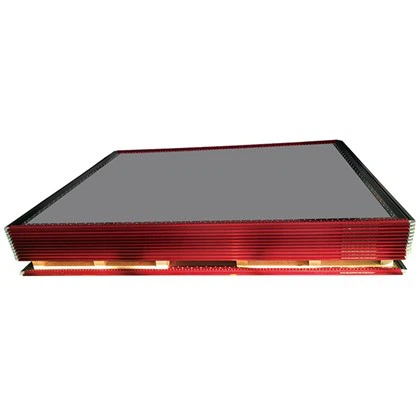
At the end of the day, the worst thing is sitting on the tarmac, watching your cargo get warmer by the minute, ‘cause your pallet wasn’t built for the cold chain. I’ve been there, and I don’t want anyone else to go through that. If you’re tired of dealing with pallets that don’t deliver, or you just have questions about what you need for your next cold chain shipment, hit me up. We’ve got samples, we’ve got custom sizes, and we’re always here to help you get your goods where they need to be, at the right temp, without the stress.
Pallet Dolly References
- Air Cargo World. (2022). Cold Chain Logistics Pallet Specifications for Commercial Aircraft. International Air Transport Association (IATA) Cargo Manual, Chapter 12.
- U.S. Food and Drug Administration (FDA). (2021). Guidance for Industry: Cold Chain Management of Pharmaceutical Products During Transportation.
- International Organization for Standardization (ISO). (2020). ISO 12489:2020 – Thermal Performance of Pallets for Use in Temperature-Controlled Freight Transport.
- USDA Food Safety and Inspection Service (FSIS). (2023). Cold Chain Requirements for Fresh and Frozen Seafood in Air Freight.
Wuxi Aviation Ground Equipment Co., Ltd.
Wuxi Aviation Ground Equipment Co., Ltd. is well-known as one of the leading air cargo pallet manufacturers and suppliers in China. Please rest assured to buy or wholesale discount air cargo pallet for sale here from our factory. For price consultation, contact us.
Address: No.18 Dingxiang East Road, Hudai Town, Binhu District, Wuxi, Jiangsu, P.R. China
E-mail: sales@wxagecl.com
WebSite: https://www.wxagecl.com/
