Hey everyone,
I get asked this question all the time—probably every single week, sometimes multiple times a day, whether I’m answering emails, chatting with folks at trade shows, or even fielding random DMs from people who just found our night vision goggles on Instagram. “Wait, so can these things actually see through walls?” Let me cut through the noise here—no jargon, no clickbait, just the straight-up science and real-world stuff from someone who sells night vision gear for a living (we’re not selling magic, promise). Night Vision Goggles
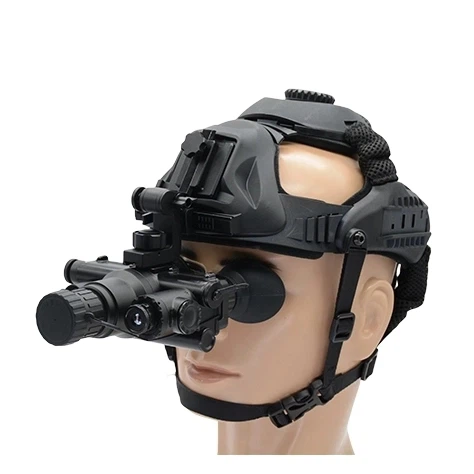
First off, let’s start with the basics: what do night vision goggles (NVGs) actually see? Most people mix up two core types, and that’s where half the confusion comes from. There’s image intensification (I²) tech, which is the kind we sell 90% of the time for recreational use (hunting, camping, backyard stargazing) and professional stuff like tactical or search-and-rescue. Then there’s thermal imaging, which works a whole different way and a lot of people lump into “night vision” even though they’re separate tools. I’ll touch on both, but let’s get to the wall question first because that’s the one everyone cares about.
The short answer? No. Not a single commercially available NVG—even the high-end tactical ones we supply to law enforcement and rescue teams—can see through solid walls. Wait, but hold on, why do some viral videos or YouTube shorts make it look like they can? I’ve seen a ton of those lately, and 9 times out of 10, that’s a trick. Either they’re using a thermal scope (wait, that’s different) that can pick up heat signatures through thin materials like drywall, or they’re showing a gap under a door, a window, or a cracked wall that people just assume is a solid wall. I’ve even seen one where the creator taped a thin sheet of cardboard over a heat camera and acted like it was a full wall—total clickbait.
Let’s break down the science so you don’t get tricked. Image intensification NVGs work by amplifying tiny amounts of existing light—starlight, moonlight, even faint airglow—into a bright, visible image. The core component is a photocathode that converts photons (light particles) into electrons, amplifies those electrons thousands of times, then turns them back into visible light on a tiny screen. The catch here? Light can’t pass through most solid walls. Drywall, brick, wood, cinder block—all block visible light, even the super dim stuff NVGs amplify. There’s no way photons from outside a wall (say, moonlight hitting someone on the other side) are going to punch through that and register on your goggles. It’s like trying to shine a flashlight through a brick wall—unless the wall has a hole, nothing gets through.
Now, thermal imaging (let’s be clear, this isn’t traditional night vision, but it’s often grouped together) works differently: it detects heat radiation, not visible light. Every object above absolute zero (-459.67°F) emits some heat, so thermal cameras pick up those temperature differences—hot things like bodies, cars, or campfires show up bright, cold things like walls, trees, or concrete show up dark. Here’s the thing: very thin, porous materials like drywall (usually ½-inch or less) will let a tiny bit of heat through, but only a tiny bit. A 2-inch brick wall or a solid stud wall? Not a chance. The heat signature gets absorbed by the wall material before it can reach the other side. You might get a faint blip if someone’s pressed up against a paper-thin wall, but that’s not “seeing through walls”—that’s picking up a faint heat transfer, and it’s super blurry, not like the crisp images you see in movies. Also, high-end thermal is way more expensive than standard image intensification NVGs, so most casual users don’t have that.
Wait, but why do I even get this question so much? Pop culture, obviously. Think about every action movie or show where the SWAT team busts down a door and their NVGs let them see the bad guy hiding behind the wall. That’s Hollywood magic. Producers use thermal cameras for those scenes, and they also edit in extra heat glow to make it look more dramatic. I’ve had a former FBI agent reach out to us last year saying he got a bunch of questions from family members after watching a new tactical show where the NVGs “saw through” a closet wall—he even joked he had to fact-check for his own mom, which made me laugh.
Let’s also talk about the myth of “X-ray vision” NVGs, which some sketchy online sellers try to peddle. If you’ve seen ads for “night vision goggles that see through clothes!” or “see through walls in the dark!”—stay far away from those. Those are either glorified digital cameras with a IR flash (which doesn’t penetrate anything) or outright scams. We get people all the time asking about these, and we always tell them: if it sounds too good to be true, it is. The only way you’d get anything close to “seeing through” is if there’s a gap, a window, or a really thin, porous material like a shower curtain. I remember a customer reached out last year saying he thought his new NVGs could see through his neighbor’s fence—turns out he was peeking through a small gap in the wooden slats, and just assumed it was the whole fence. That’s the same mistake everyone makes.
Now, let’s be real—does that mean NVGs are useless if you can’t see through walls? Absolutely not. They’re game-changing for lots of things, and that’s what we sell them for. For example, we supply NVGs to search and rescue teams looking for lost hikers in the mountains at night—they amplify starlight so rescuers can spot a hiker’s headlamp or even their body heat (with thermal) from miles away. Hunters use them to track game without spooking it, because they don’t give off bright visible light. Campers use them to walk around the campsite at night without tripping over roots or gear. Even homeowners use them to check their backyard for wildlife or keep an eye on their property after dark. The key is using them for what they’re actually designed for, not what Hollywood says they can do.
I should also clarify a common mix-up with digital night vision vs. the traditional image intensification NVGs we sell. Digital NVGs use a regular camera sensor and an infrared (IR) illuminator to light up the area in front of you—think of it like your phone’s front camera flash, but invisible to the naked eye. Those can’t see through walls either, and the IR range is super limited—usually only 50 to 100 feet, compared to the hundreds (or even thousands) of feet our high-end I² NVGs can do. The IR flash also doesn’t penetrate walls, same as visible light.
Wait, I know what some of you are thinking: “What about military grade?” I get that—people assume military gear has some secret tech that lets it see through walls. Nope, not really. The military’s top-tier NVGs are just way more sensitive to light, can work in almost total darkness, and have way better resolution than consumer models. I’ve talked to a former Army veteran who works in tactical gear and buys from us sometimes, and he said the closest military tech gets is thermal binoculars that can pick up faint heat through extremely thin walls in ideal conditions (like a ¼-inch drywall with nothing on the other side, and the heat source is pressing right against it). But even that’s not “seeing through”—it’s a faint blip, not a clear image of a person. And that’s specialized thermal, not standard night vision.
Let’s go back to the people who get scammed by those fake “wall-seeing” NVGs. Last month, a customer sent us a video of a pair he bought from a random online store for $100, saying it could see through his living room wall. We watched the video, and turns out he was holding the goggles right against the wall, and the “image” was just the faint glow of the streetlight outside through the drywall’s tiny pores. That’s not magic—that’s just low-level light filtering through, and anyone with half-decent vision could see that if they pressed their eye to the wall. The sellers don’t mention that part, obviously.
So what can NVGs do, for real? Let’s list a few of the actual uses we hear about from our customers, because that’s what matters. For night hikers: we had a guy last summer who got lost in the National Forest after dark, and when the search team found him, he was using his entry-level NVGs to navigate through the woods, avoiding ravines and downed trees that would’ve been impossible to see with just a headlamp. For hunters: a big game hunter from Montana uses our mid-tier I² NVGs to track elk at night, and he told us he’s seen them pick up a cow elk from over 1,200 yards away in total moonless darkness. For families: a mom in Ohio bought a pair for her teen kids to use when they go camping, and she uses hers to check on her chickens in the coop after dark, since foxes sometimes come around—way better than turning on a bright light that scares everything away.
Now, I know some of you are still curious about that thermal thing, because it’s the closest you’ll get to “seeing” something through a wall. If you’re in a situation where you need that, like a tactical or rescue scenario, thermal is the tool, but it’s not cheap. We don’t specialize in thermal, but we work with a partner company that does, and I always tell people: if wall penetration is your top priority, save up for a professional-grade thermal imager, and understand that it will only pick up faint heat blips through very thin materials, not clear images. And even then, it’s not “see through walls”—it’s detect faint heat transfer.
Wait, let’s address another myth: some people say that IR light from NVGs can bounce off walls, like sonar, and let you see what’s on the other side. No, that’s not how light works. IR light is just another wavelength of light, same as visible light, so it gets absorbed or reflected by walls, not bounced back like sound. If it reflects, it’s just bouncing off the front of the wall, so you’d see the wall itself, not what’s behind it. That’s like shining a flashlight at a wall and expecting to see what’s on the other side—doesn’t happen.
I’ve been selling NVGs for over 8 years now, and one of the most frustrating things is when people write them off as useless because they fell for the “see through walls” lie. Or the opposite: they buy a scam product, get mad that it doesn’t work, and leave a bad review for us. That’s why I wanted to write this post—cut through the bullshit, tell you exactly what these things do (and don’t) do, so you can make an informed purchase, not waste money on junk.
At the end of the day, night vision goggles are incredible tools for navigating total darkness, spotting things the naked eye can’t, and staying safe after dark. They’re not magic, they don’t see through walls, and anyone telling you differently is either trying to sell you something or lying for views. If you’re in the market for real, tested, reliable NVGs (we only sell gear that’s been field-tested by actual hunters, rescuers, and military folks, not stuff off Amazon with fake specs), we’d love to chat. Whether you’re a weekend camper, a professional who needs gear for work, or just someone who wants to keep your family safe, we can help you find the right pair for your needs. No pushy sales talk, no scams, just straight answers and quality gear.

If you have questions, hit us up to connect for procurement discussions—we’re happy to walk through specs, answer more science questions, or even help you figure out what type of NVG is best for your use case.
References
Night Vision National Optical Astronomy Observatory. "How Night Vision Works." NOAO Education and Public Outreach.
U.S. Department of Defense. "Thermal vs. Image Intensification: Tactical Night Vision Technology Overview."
Journal of Night Vision and Infrared Technology. "Light Penetration Through Common Building Materials at Visible and Near-Infrared Wavelengths."
International Society for Optics and Photonics. "Review of Thermal Imaging for Low-Visibility Detection and Monitoring."
Shenzhen Detyl Optoelectronics Co., Ltd.
With abundant experience, we are one of the most professional night vision goggles manufacturers and suppliers in China. Please rest assured to buy customized night vision goggles at competitive price from our factory. For pricelist and quotation, contact us now.
Address: 4th Floor, Building 3, Factory, No. 20, Second Industrial Avenue, Tangxiayong Community, Yanluo Street, Bao’an District, Shenzhen
E-mail: sales@detyl.com
WebSite: https://www.detyl.net/
