If you’ve ever called me late on a Tuesday night panicking because you need insulated glass (IG) for a last-minute commercial remodel, or shot me an email asking why the quote I sent you went up 12% from the last project, I get it. I’ve been an insulated glass supplier for 11 years, and I can’t count how many times I’ve walked a client through a quote line item, only to get the same blank stare: “Wait, it’s just two panes of glass with air between them—how does it cost so much?” Insulated Glass
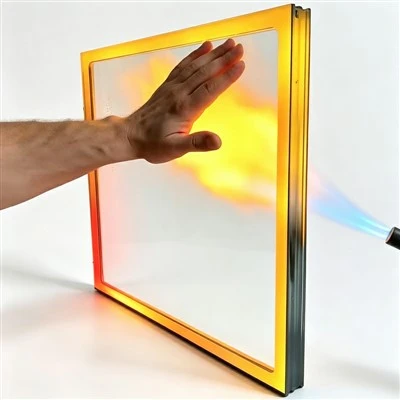
To be fair, it’s not just two panes. It’s a precision-engineered component, the kind of thing that keeps coffee shops from sweating through their storefronts in July, keeps apartment complexes from overheating so bad tenants run their AC 24/7, and even protects museum exhibits from UV damage that fades paintings. The cost of that component doesn’t just pull numbers out of thin air. Every part of the process, from the glass you pick to the sealant we use after it’s assembled, adds up. Today I’m breaking down the real factors that affect insulated glass cost, straight from the guy who stacks the pallets at my warehouse, pulls the quotes, and answers the midnight crisis calls.
First, let’s talk about the star of the show: the glass itself. Not all glass is created equal, and that’s the biggest driver of cost difference between two IG units. When most people hear “insulated glass,” they think of standard clear float glass, the kind you see in basic residential windows. That’s the cheapest option, and it works for places where energy efficiency isn’t a top priority—like a storage shed, or a back room that only sees occasional use. But if you need it for a front-facing office window, or a window in a climate that swelters through summer or freezes solid in winter, clear glass is no longer enough.
Let’s start with thickness. Glass thickness is measured in millimeters, and every 0.5mm jump adds cost. Standard residential IG uses 3mm or 4mm glass panes, which is thin enough for basic use. Commercial projects often opt for 6mm panes, which are sturdier, hold up better to strong winds (important for hurricane zones), and reduce the risk of breakage from construction debris. If you’re working on a high-rise building, we might even go up to 8mm or 10mm glass—those are thick, heavy, and way more expensive. They’re not just thicker; they’re tempered, too. Tempered glass goes through a special heat treatment that makes it 4-5 times stronger than regular glass, and when it breaks, it shatters into tiny, harmless pieces instead of sharp shards. That’s non-negotiable for most commercial spaces, especially around entryways or public areas, and the tempering process itself adds a significant chunk of cost.
Then there are the specialty glass coatings that make IG actually do its job. Low-emissivity (low-e) coatings, for example, are micro-thin layers of metal oxide that reflect heat back into a building in winter, and block unwanted solar heat in summer. Not all low-e coatings are the same, either. We have passive low-e coatings, which are designed for cold climates, and solar low-e coatings, which are built for hot, sunny regions. The better the coating, the more it costs, and the bigger the energy savings you get over time. For a client in Minnesota, a passive low-e unit might be 15% more expensive, but it cuts their heating bills by 25%—that’s a no-brainer. But if you’re in Florida, a solar low-e unit is worth every penny, even if it costs 20% more than clear glass. We also have UV-reflective coatings for museum windows, which block 99% of harmful UV rays to protect artwork, and that’s another tier of cost entirely. I once quoted a 10-unit IG package for a small art gallery, and the specialty UV glass alone made up 40% of the total cost.
Another glass specialty is laminated glass, which is two or more panes bonded together with a plastic interlayer. Laminated glass doesn’t just offer UV protection; it also holds together when broken, making it ideal for areas with high security risk, or for floors (yes, people use IG for floor panels in modern lofts). The interlayer material can also vary: standard PVB (polyvinyl butyral) is common, but acoustic interlayers, which reduce noise from busy streets or airports, add even more cost. A client in downtown Chicago who wanted IG for his second-floor office overlooking Michigan Avenue would pay extra for acoustic laminated glass, but he told me it eliminated the need for $15,000 worth of window treatments to block traffic noise.
Next up, the gap between the two glass panes. That gap isn’t just empty space—it’s a sealed air space (or sometimes argon gas) that does the actual insulating. The size of that gap directly affects cost, and also performance. Standard gaps are 12mm, 16mm, or 20mm. A 12mm gap is the cheapest, but a 16mm gap gives better insulation, and a 20mm gap is even more effective for extreme climates. We don’t just drill a hole and pump air in, either. We use desiccants—tiny, porous materials that absorb moisture—to keep the inside of the IG unit dry, so no fog forms. The wider the gap, the more desiccant we need, which adds cost, and the more precise we have to be when sealing the edges to prevent moisture from getting in. For a standard home, a 12mm gap works, but if you’re in a place like Toronto, where winter temperatures drop to -20°C, a 20mm gap is worth the extra cost for the energy savings.
Then there’s the gas fill inside the gap. Most basic IG units use dry air, which is cheap, but not the most effective. Argon gas is denser than air, so it transfers heat much slower, making the IG unit more insulating. Argon is odorless, non-toxic, and harmless, so it’s been the go-to for energy-efficient IG for decades. Krypton gas is even denser, but it’s also way more expensive, so we only use it for very small gaps, like in triple-pane IG units, where argon wouldn’t perform as well. A triple-pane IG unit with two argon gaps will cost two to three times more than a basic dual-pane air-filled unit, but it’s the gold standard for super-insulated homes or commercial spaces in the coldest climates. I recently worked on a net-zero energy home in Alaska, and we used triple-pane argon-filled IG units; the client said the units paid for themselves in energy savings in 7 years.
Now, the assembly process itself. IG units are custom-made, right? You can’t just buy a one-size-fits-all IG panel. Every unit is cut to exact dimensions based on your window or door size, and that custom cutting and shaping adds cost. We have to cut each glass pane to within 0.1mm of the required size—any more and the unit won’t seal properly. For large units, like the storefront windows at a new grocery chain, custom cutting is more complex, and the risk of breakage during cutting is higher, so that adds to the cost. The edge sealing is another critical step. We use either silicone sealant or polyurethane sealant to seal the edges of the IG unit, and the quality of that seal matters. A cheap seal might fail in 5 years, leading to foggy windows, while a high-quality, UV-resistant seal can last 20+ years. I once had a client who went with a cheaper IG unit from a different supplier, and 3 years later half his windows were fogged; he paid twice as much to replace them with our units, which have a 15-year seal warranty. The assembly also includes the spacer bar that goes between the two glass panes. Spacers can be aluminum (the cheapest), or thermally broken spacers, which are made of a non-conductive material like stainless steel or composite. Thermal break spacers prevent heat transfer through the spacer, so they improve the IG unit’s energy performance, and they’re more expensive than aluminum. For a commercial building in a hot climate, thermal break spacers are worth the cost, because they reduce heat transfer through the edges of the unit by up to 30%.
Wait, I should also mention size and quantity, because that’s a big one I always walk clients through. The size of the IG unit affects cost, but not in the way you might think. Small units, like the ones for a bathroom window, are cheaper per square foot than large units, like a storefront window that’s 8 feet tall. Large units are heavier, more difficult to handle, more likely to break during assembly or installation, and require more materials, so their per-square-foot cost goes up. Then there’s quantity. If you need 100 identical IG units for a new apartment complex, we can produce them in bulk, which lowers the cost per unit. But if you need just one custom unit to replace a broken window in an old home, that’s a custom production run, so it’s way more expensive. Last year, a homeowner called me on a Friday afternoon, panicking because his 70-year-old leaded glass IG unit broke. We couldn’t get an exact match, so we had to custom-make a unit to match the size, thickness, and pattern of the original, and that single unit cost him $1,200. For a bulk order of 100 units, that same size and type would have cost around $300 each.
Oh, and don’t forget location and shipping. I’m based in the Pacific Northwest, so we source most of our glass from manufacturers in Washington and Oregon, but if you’re on the East Coast, shipping large, heavy glass panels across the country adds a big chunk to the cost. A client in Miami might pay $500 just in shipping for a 10-unit IG order, while a client 50 miles from our warehouse would pay $50. We also factor in local building codes. Some regions have stricter energy codes, like California’s Title 24, which requires higher-performance IG units, so those units have to meet specific standards, adding to the cost. Hurricane zones like Florida and Texas require IG units that can withstand high wind loads, so those units have to be tested and certified, which is an extra cost.
I know all this can feel overwhelming. When you’re getting a quote, it’s easy to just look at the bottom line and pick the cheapest option. But I’ve seen too many clients regret that. A $100 cheaper IG unit might save you money upfront, but if it fails in 5 years, or doesn’t cut your energy bills, you’ll end up paying more in the long run. That’s why I always start by asking clients a few questions: What’s the project location? What kind of space is this for? What are your energy goals? Do you need noise reduction, UV protection, or security? Once I have those answers, I can put together a quote that’s not just the cheapest, but the right one for your needs.

If you’re working on a project—whether it’s a new home, a commercial building, a renovation, or even a single window replacement—and you have questions about insulated glass, or you’re ready to get a quote, don’t hesitate to reach out. I’m here to walk you through every step, make sure you understand what you’re paying for, and get you the IG unit that fits your project’s needs and budget.
Curved Laminated Glass References
American Architectural Manufacturers Association. (2021). Insulating Glass Unit Performance and Design Standards.
National Fenestration Rating Council. (2022). Fenestration Energy Performance Ratings Guide.
U.S. Department of Energy. (2023). Energy Saver: Insulated Windows.
Suzhou Dingcheng Tempered Glass Co., Ltd.
As one of the most professional insulated glass manufacturers and suppliers in China, we also support customized service. We warmly welcome you to wholesale high quality insulated glass made in China here from our factory. If you have any enquiry about free sample, please feel free to email us.
Address: No.777 Limin North Road, Lili Town, Wujiang District, Suzhou City, Jiangsu Province
E-mail: Dingchengglass@163.com
WebSite: https://www.dingchengglass.com/
