If you’ve ever walked through a factory making phone cases, medical device components, or disposable packaging, you’ve probably seen an ultrasonic welding machine at work—its thin, vibrating horn pressing down, joining two pieces of plastic in a fraction of a second, no messy glue or excess heat required. As someone who’s spent the last 12 years selling ultrasonic welding equipment to small-run prototypers and Fortune 500 production lines alike, one of the most common questions I get from new customers is: “What’s the thinnest material this machine can actually weld?” It’s not a one-size-fits-all answer, and I’ve seen too many shops waste money on the wrong machine because they picked a number off a spec sheet without thinking through the details that actually make a thin weld work. Ultrasonic Welding Machine

First, let’s bust the biggest myth here: there’s no universal “minimum thickness” that applies to every ultrasonic welder or every material. I once had a customer come to me thinking he could weld 0.05mm thick polypropylene film on a low-cost, entry-level ultrasonic unit he’d found online. By the time he called me, he’d run three failed test runs, with the film either tearing, burning, or forming a weak seam that split when he tried to package his small medical test strips. The problem wasn’t just the thickness of the film—it was a mix of the machine’s frequency, the horn design, and even the shape of the part he was welding.
Let’s start with the core technology: ultrasonic welding works by converting electrical energy into high-frequency mechanical vibrations (usually 20kHz, 30kHz, or 40kHz) that travel through the parts being joined. The friction from these vibrations generates heat at the joint, melting the plastic just enough to fuse the two pieces together. For thick parts, that heat has to penetrate deep, but for thin materials, the risk is that too much vibration will tear the material before the plastic even melts, or that the heat will escape too fast to form a strong bond.
So, what’s a realistic range for thin materials? For most standard thermoplastics—think polyethylene, polypropylene, ABS, and PET—we regularly weld materials as thin as 0.025mm, which is roughly the thickness of a piece of standard tissue paper. That’s not a gimmick; it’s common for disposable medical masks or lithium-ion battery separator films. But that’s only with the right machine setup. If you try to use a 20kHz machine (the lowest common frequency) for that kind of thin work, you’re going to have a bad time. The higher the frequency, the smaller the vibration amplitude, and the more precisely the energy is directed. For thin materials, 30kHz or 40kHz machines are almost always the right choice. I’ve seen 20kHz units work for materials as thin as 0.1mm, but only if the part has a very narrow weld area—like a small spot weld on a plastic tag, not a continuous seam across 10cm of film.
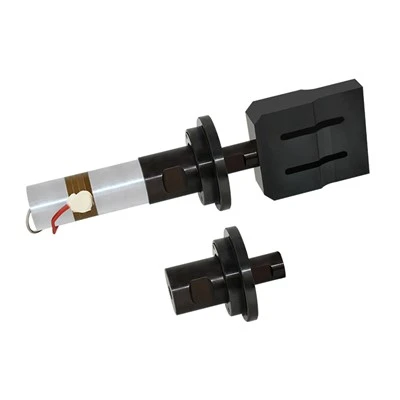
Another factor that makes a huge difference is the part’s weld geometry. You can’t weld a wide, flat strip of 0.05mm PET the same way you’d weld a small, narrow joint on that same thickness. We use what’s called an energy director— a small, raised ridge on one of the two parts being joined—to concentrate the vibration energy exactly where we want it. For thin materials, we make those energy directors tiny, often less than 0.1mm high, so all the heat forms right at the ridge without spreading out and tearing the rest of the film. If a customer comes to me with a thin film part and no energy director, the first thing I’ll do is suggest a custom-designed horn that has a narrow, precise tip to match the weld line, or we’ll add a tiny mechanical guide to hold the film in place during welding. That’s a small tweak, but it’s the difference between a weld that holds and one that falls apart.
Then there’s the material itself that can’t be overlooked. Not all thin plastics behave the same. A thin, flexible polyethylene film will react differently to ultrasonic vibration than a thin, rigid PVC sheet, or even a composite material like nylon blended with fiber fill. I once had a customer in the solar panel industry trying to weld 0.03mm thick EVA film (used to encapsulate solar cells). The first machine he tried was for general-purpose plastic, and it burned through the EVA because EVA has a lower melting point and is more prone to softening under high vibration. We switched him to a machine with a variable amplitude control, which lets him dial back the vibration strength just enough to melt the EVA without damaging it, and now he produces 10,000 panels a day with zero weld failures. For materials that are heat-sensitive, like thin medical films or packaging for food, we also use a process called “low-energy ultrasound” that cuts the vibration amplitude by 30-40% compared to standard settings, which is critical for keeping the material intact.
I’ve also learned over the years that many customers fixate on the minimum thickness number, but they forget to ask about the maximum thickness the same machine can handle. A lot of small businesses will buy a 40kHz machine because they think it’s better for thin materials, then later they need to weld a 1mm thick plastic component and find that the machine doesn’t have enough power to do it. Our approach is always to talk through a customer’s full range of parts, not just the thinnest one, to pick a machine that works for all their current and future needs. For example, a 30kHz machine can typically handle materials from 0.05mm up to 8mm, which covers most of the thin film to medium rigid part needs our customers have. A 40kHz machine goes as low as 0.01mm but tops out around 3mm, which is great for small medical or electronics parts but not for larger, thicker components.
I always tell new customers that the best way to figure out what thickness you can weld is to bring in a sample of your material and your part design for a test weld. We have a lab here where we run free test trials, and I’ve seen it solve so many problems before a customer makes a purchase. Last month, a customer who makes custom earrings came in with 0.08mm thick acrylic sheets, worried she’d tear them during welding. We ran three tests: one with a standard horn, one with a narrow precision horn, and one with a custom energy director. The narrow horn gave her a perfect, clean weld that didn’t leave any marks, and she went on to place an order for a small desktop ultrasonic machine for her in-house production. Without that test, she would have assumed she needed an expensive industrial unit, or that it was impossible to weld such thin acrylic.
Now, let’s talk about what you should never assume about minimum thickness. If a spec sheet says a machine can handle “as low as 0.01mm,” that doesn’t mean it will work for your part. Spec sheets use ideal test conditions: smooth, flat materials, perfect weld geometry, and no constraints on part size. In the real world, you have to account for the size of the part, the rigidity of the material, and whether you need a continuous seam or just a spot weld. For example, a small spot weld on 0.02mm film is way easier than a 10cm long continuous seam on the same thickness, because the spot weld concentrates the energy in a tiny area, while the seam has to keep the vibration consistent across the whole length.
I’ve also seen customers try to use old, worn-out machines for thin material work, and that’s another mistake. As ultrasonic horns and weld heads wear down, the vibration quality degrades—you get uneven energy distribution, which can cause thin materials to tear or have weak spots. A machine that’s 5 years old might work for thick parts but struggle with thin ones, because it can’t deliver the consistent, precise vibration needed. That’s why regular maintenance and investing in a well-built machine is so important, even for small production runs.
At the end of the day, the minimum thickness an ultrasonic welding machine can handle isn’t a fixed number—it’s a conversation that depends on your materials, your part design, your machine’s frequency and power, and the process you use. If you’re working with thin materials, don’t just hunt for a spec number online. Bring your samples to a supplier that does test welds, and talk through all the parts you need to make, not just the thinnest one. That’s how you avoid wasting time and money on a machine that doesn’t work for your needs.
If you’re currently struggling with a thin material weld that won’t hold, or you’re ready to invest in an ultrasonic welding machine for your production line, we’re here to help. Our team has worked with everything from 0.02mm medical films to thick automotive plastics, and we can run test welds with your exact parts to find the right setup for you. Don’t guess at what machine you need—let’s talk through your project and find a solution that works for your specific needs.
Ultrasonic Sewing and Cutting Machine References:
- Benatar, A. (2006). Ultrasonic welding of plastics: fundamentals and applications. Hanser Gardner Publications.
- Materials Science and Engineering Department, University of Michigan. (2018). Ultrasonic vibration effects on thin thermoplastic film joining. Journal of Manufacturing Processes, Vol. 32, pp. 456-465.
- The Society of Plastics Engineers (SPE). (2020). Ultrasonic Welding Guide for Thin Wall and Film Applications. SPE Plastics Engineering Handbook.
Hangzhou Shengtu Technology Co., Ltd.
Hangzhou Shengtu Technology Co., Ltd. is one of the most professional ultrasonic welding machine manufacturers and suppliers in China, featured by quality products and low price. Please rest assured to buy ultrasonic welding machine for sale here from our factory. Also, customized service is available.
Address: No.16, Changtai Street, Changkou Town, Fuyang District, Hangzhou, Zhejiang, China 311400
E-mail: tina@fun-sonic.com
WebSite: https://www.ultrasonic-coating.com/
