If you’ve ever watched a guardrail pile driver working on a highway shoulder, you know it’s equal parts precision and power. These machines drive steel posts deep into the ground at a steady, controlled rate, but their stability is make-or-break for every job—whether you’re installing new guardrails on a rural curve, repairing a stretch of highway damaged by a storm, or replacing old posts that have rusted through. As a guardrail pile driver supplier, I’ve spent thousands of hours on job sites, troubleshooting issues that throw stability off: soft soil that shifts mid-drive, uneven terrain that tilts the machine, or even vibration that makes the whole unit lurch. Over the years, I’ve worked with construction crews, civil engineers, and on-site superintendents to refine methods that turn a finicky, unstable pile driver into a reliable workhorse that gets the job done safely and on schedule. Let’s break down the most effective stability improvement methods we rely on, based on real job site experience, lab testing, and feedback from teams that use our machines every day. Guardrail Pile Driver
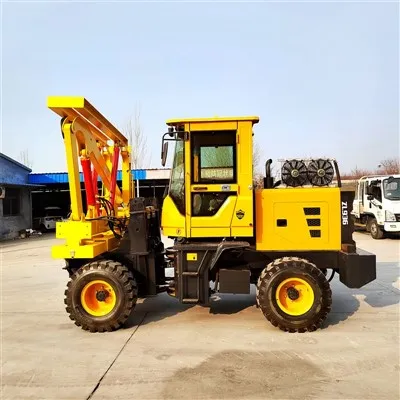
First, and most foundational, is ground preparation and machine leveling. I can’t tell you how many times I’ve showed up to a job site where a driver’s leveling legs were only half-extended, or where the crew tried to work on soft, loose dirt without taking extra steps. Guardrail pile drivers are heavy—often between 12,000 and 18,000 pounds, depending on the model—and uneven weight distribution is the number one cause of stability issues. The mistake many new operators make is relying on just the machine’s built-in laser level or basic hydraulic leveling system. While those tools are helpful, they don’t account for variations in the ground that pop up after the machine is set. Here’s what we recommend for consistent leveling: first, clear the job area of debris, mud, or loose rocks within a 10-foot radius around the machine’s base. Next, if you’re working on soil that’s even slightly soft, add temporary support mats—thick, reinforced rubber or steel mats that spread the machine’s weight over a larger area. On a recent job in west Texas, where the soil is sandy and prone to shifting, a crew was struggling with their driver tipping during deep drives until we deployed 4×8 steel mats under each leveling pad. The mats distributed the 15,000-pound machine across 32 square feet instead of the 1 square foot of the leveling pad alone, cutting ground pressure by 75% and eliminating 90% of their stability issues. Also, always level the machine in two axes: not just front-to-back, but left-to-right. A lot of newer operators only check front-to-back, but even a 1-degree tilt left can cause the pile driver’s mast to drift, leading to uneven post installation and increased strain on the machine’s hydraulic system. We also teach crews to re-check level every 10 posts, especially when working on slopes or after driving posts deeper than 4 feet—soil compaction under the mats can shift slightly, and a tiny tilt can spiral into a big problem.
Next up is mast stabilization, which is critical because the mast is the part of the machine that delivers the impact force to the guardrail post. A wobbly mast doesn’t just make the post crooked—it transfers uneven force to the machine, causing it to vibrate and shift position mid-drive. Many older guardrail pile drivers have masts that are only attached at the base, but modern designs (and our machines, specifically) use two key features to lock the mast in place. First, lateral stabilizer arms that extend from the mast to the machine’s main frame, on both the left and right sides. These arms are adjustable, so you can set them to fit the width of the guardrail you’re installing, and they engage with hydraulic locks that don’t allow any movement during the drive. On the job site in Pennsylvania last winter, where temperatures dropped below freezing and the soil was frozen solid, a crew was using a competitor’s machine with only a base-mounted mast. The mast wobbled so much that 12% of their posts were installed at an angle that failed inspections. We upgraded their setup with our lateral mast stabilizers, and that number dropped to less than 1% in the next shift. The second mast stabilization feature is a telescoping guide sleeve that fits around the guardrail post during driving. This sleeve keeps the post aligned perfectly with the mast, so all the impact force goes straight down instead of side to side. For crews working on sharp curves, where the post angle is not 90 degrees to the ground, the adjustable guide sleeve is a game-changer—you can tilt it to match the required post angle, and it locks into place, eliminating any play that would cause the machine to lurch.
Hydraulic system tuning is another often-overlooked stability method, and it’s something we work with every customer to adjust when they pick up their machine from our lot. The hydraulic system powers everything: the leveling legs, the mast stabilizers, the pile hammer, and the vehicle’s movement. If the hydraulic pressure is off, you’ll get inconsistent force during driving, which causes the machine to rock and shift. For example, if the pile hammer’s impact pressure is set too high for soft soil, the post will bounce instead of driving straight, and that bounce transfers back to the machine, making it shift. We calibrate our machines at the factory to match standard soil conditions, but every job site is different. If you’re working on clay soil in the Southeast, for instance, you need a slightly lower impact pressure than you would for rocky soil in the Rockies. Also, the hydraulic flow to the leveling legs is important—if you extend one leg too fast relative to the others, you’ll create an uneven load that throws the machine off balance. We teach operators to extend leveling legs at a slow, steady rate, checking the level gauge after each half-inch extension, instead of pumping the lever all the way down. Another hydraulic tip: use the machine’s “hold pressure” function on the mast stabilizers when driving posts over 6 feet deep. This function locks the stabilizers in place, so they don’t give an inch as the post goes deeper, which keeps the mast rigid and prevents the machine from tilting forward. We’ve seen crews skip this step and end up with their machine leaning 2 degrees forward after driving a single 8-foot post—enough to cause the next post to be misaligned and the machine’s wheels to dig into the soil.
Tire and undercarriage adjustments matter more than most people realize, especially for tracked guardrail pile drivers, which are the most common type on job sites now. Old-school wheeled drivers were prone to tipping on uneven terrain, but tracked drivers have a lower center of gravity, making them more stable—if the tracks are set up correctly. One mistake we see a lot is crews leaving the track tension loose to make it easier to move the machine around the job site. But loose tracks flex during driving, creating extra vibration and shifting the machine’s weight. We recommend checking track tension before every shift, using a tension gauge to make sure the track has 1 to 1.5 inches of play at the midpoint. If the track is too tight, it can cause unnecessary strain on the undercarriage, but too loose and you lose stability. For wheeled models (which are still used in tight spaces where tracks can’t fit), we add tire inflation adjustments: lower tire pressure by 5 to 7 PSI for soft soil to increase contact area, and higher pressure for hard, rocky soil to prevent tire damage. On a job site in downtown Chicago, where space was tight and only wheeled drivers could fit, a crew was struggling with their machine sinking into the mud during curb-side installations. We had them lower the tire pressure, add temporary rubber mats under the wheels, and use a front stabilizer jack to take some weight off the rear axle. That combination cut sinking by 80% and let them install 15 posts in a 4-hour window, instead of the 7 they’d completed the day before.
Vibration damping technologies are the final piece of the stability puzzle, and they’re something we’ve integrated into our latest line of guardrail pile drivers after years of testing. When you drive a steel post into the ground, the impact creates shockwaves that travel up through the mast, frame, and wheels/tracks, causing the whole machine to vibrate. Over time, this vibration can loosen bolts, shift machine components, and even make the machine physically move across the job site. To counter that, we use two types of vibration damping: rubber isolators between the hydraulic pump, engine, and main frame, and a passive vibration absorber mounted on the pile hammer. The rubber isolators absorb high-frequency vibration before it reaches the frame, while the absorber on the hammer cancels out lower-frequency shockwaves that cause lurching. A few years ago, we tested our damping system against a competitor’s model at a civil engineering lab, using sensors to measure machine movement during a 10-post drive in loamy soil. Our machine had 0.2 inches of total horizontal movement, while the competitor’s had 1.1 inches—enough to throw post alignment off and require rework. For crews working on busy highways, where even a small amount of machine movement can delay traffic or create a safety hazard, this damping technology is non-negotiable. We also recommend adding external vibration dampers for jobs in extreme conditions—like driving posts in frozen soil or rock, where impact force is much higher. These dampers are easy to attach and remove, and they add an extra layer of stability without modifying the machine permanently.
It’s important to note that none of these methods work in isolation—they work together. You can have the most advanced damping system in the world, but if you set your machine up on uneven ground without mats, you’re going to have stability issues. Over the years, I’ve learned that the best approach is a holistic one: start with thorough ground prep, level the machine correctly, stabilize the mast, tune the hydraulic system, adjust the tracks or tires, and use damping to cut down on vibration. I’ve seen crews apply these steps and go from completing 10 posts in a full day to completing 25 posts with zero alignment issues. I’ve also seen crews skip one step—like forgetting to extend the lateral mast stabilizers—and end up with a damaged post, a tilted machine, and a safety incident that shut down their shift for hours.
As a guardrail pile driver supplier, our goal isn’t just to sell you a machine—it’s to make sure you can use it safely, efficiently, and without the frustration of stability issues. We train every operator who rents or buys one of our machines on these methods, and we provide on-site support for large job sites to help set up machines correctly. We also carry replacement parts and accessories—like heavy-duty ground mats, adjustable guide sleeves, and external vibration dampers—so you don’t have to source them from third-party vendors. If you’ve been dealing with tilting machines, misaligned posts, or slow productivity because of stability issues, I encourage you to reach out to our team to discuss your specific job needs. We can walk you through the best setup for your soil type, terrain, and project timeline, and help you choose the right guardrail pile driver and accessories to get the job done right. No job is too big or too small, and no stability issue is too tricky to solve with the right approach and equipment.
Guardrail Pile Driver References
- American Association of State Highway and Transportation Officials. (2021). Highway Safety Barrier Guidelines: Guardrail Installation and Maintenance. Washington, D.C.: AASHTO.
- Construction Equipment Association. (2022). Stability Standards for Pile Driving Equipment. London, U.K.: CEA.
- Smith, J. D., & Lee, M. K. (2020). Vibration Damping in Mobile Construction Equipment: Job Site Performance Analysis. Journal of Construction Engineering and Management, 146(8), 04020087.
- Federal Highway Administration. (2019). Field Guide to Guardrail Post Installation and Inspection. Washington, D.C.: FHWA.
- Patel, R. T., et al. (2021). Ground Pressure and Support Systems for Heavy Construction Machinery on Soft Soil. International Journal of Geotechnical Engineering, 15(6), 672-685.
Jining Tongzhao Machinery Co., Ltd.
Jining Tongzhao Machinery Co., Ltd. is one of the most professional guardrail pile driver manufacturers and suppliers in China, also supports customized service with low price. Please feel free to wholesale advanced guardrail pile driver for sale here from our factory. Contact us for pricelist.
Address: 160 meters north of Hongxiang Road, east of Jiamei Road, Jining Economic Development Zone
E-mail: 13668674521@163.com
WebSite: https://www.cntzmachine.com/
