When I first started working as a perforated mesh sheet supplier, I’d hear every customer ask the same thing within the first five minutes of our conversation: “What’s the perforation ratio of your mesh?” At the time, I thought it was a simple, straightforward number—just a percentage I could pull up on a spec sheet. But over the past 12 years, I’ve learned that the perforation ratio isn’t just a stat; it’s the backbone of every project we help our clients build. A mistake in calculating it, or not understanding how it interacts with a project’s needs, can turn a perfect mesh into something that doesn’t work at all. That’s why today, I want to break down what perforation ratio actually is, why it matters, how we measure it, and what every buyer needs to know before they commit to a mesh for their next job. Perforated Mesh Sheet

Let’s start with the basics, because I’ve seen too many people mix up simple terms when they first dive into this. Perforated mesh sheet is exactly what it sounds like: a flat sheet of metal, usually aluminum, steel, stainless steel, or copper, with precision-cut holes punched through it. The perforation ratio is the percentage of the sheet’s total surface area that’s made up of open holes, versus the solid metal that’s left in between. It’s not the size of the holes, or how many holes there are per square inch—though those factors do play a role. It’s a ratio that captures the balance between openness and strength, light transmission, airflow, sound dampening, and even the look of the mesh once it’s installed.
To give you a real-world example, last year we worked on a restaurant project in downtown Chicago. The owner wanted perforated metal for their exterior facade—something that would let natural light filter into the dining room during the day, but would also keep the street noise and harsh winter winds out. They originally came to us with a mesh that had 30% perforation ratio, but when we tested the airflow for their HVAC system, we realized that ratio would cause their ventilation fans to work 20% harder than planned, which would have run up their energy bills by thousands a year. We adjusted the perforation ratio to 45%, kept the hole size and pattern consistent, and solved their problem without sacrificing the look they wanted. That’s the kind of impact a simple number like perforation ratio can have, and it’s why I never skip explaining it to every single client, no matter how big or small the order is.
Now, how do we actually calculate the perforation ratio? A lot of suppliers use a standard formula, but I’ve learned that it’s important to specify that this formula applies to perforated mesh with uniform hole patterns, which is what nearly all our clients order. The first step is to map the repeating unit of the mesh—what’s called a “cell” in the industry. For example, if we’re making a mesh with round holes arranged in a staggered (hexagonal) pattern, each repeating cell is a hexagon that holds one full hole and half of the holes that sit on its edges. If the holes are square, the cell is a square, each holding one full hole.
The formula itself is pretty straightforward, but it only works if you get the cell dimensions right. Here’s the basic version: Perforation Ratio = (Total area of all holes in one cell) / (Total area of the cell) × 100. Let’s break that down with a real number example, so it’s not just abstract math. Suppose we have a stainless steel mesh with round holes that are 10mm in diameter, arranged in a square pattern with a center-to-center distance between holes of 20mm. The cell here is a square, right? So the area of the cell is 20mm × 20mm = 400mm². The area of one round hole is πr², where r is half the diameter—so r = 5mm. That’s π × 25 = ~78.5mm². So we take 78.5 divided by 400, multiply by 100, and that gives us a perforation ratio of roughly 19.6%. That’s a pretty tight mesh, good for things like security grilles where you don’t want too much openness.
But here’s the catch: that formula works for round holes in square patterns, but if you have a different shape—slots, squares, hexagons, even custom shapes like logos or text—you adjust the area of the hole to match. And if the pattern is staggered, like the hexagonal hole arrangement I mentioned earlier, the cell is a hexagon, so you calculate the area of that hexagon instead of a square. We also have to account for the thickness of the metal sheet, right? Wait, no—actually, the hole is punched all the way through, so the diameter of the hole is measured from one side of the sheet to the other, so sheet thickness doesn’t impact the hole area in the ratio. It does matter for strength, but that’s a separate calculation we run alongside perforation ratio for every project.
Another thing I’ve learned over the years is that not all perforation ratios are equal, even when the number is the same. How? It comes down to hole size and pattern. Let’s say we have two meshes: both have a 30% perforation ratio. The first has 5mm round holes in a square pattern spaced 9.1mm apart. The second has 15mm round holes in a square pattern spaced 26.5mm apart. Even though the ratio is the same, the smaller holes mean the mesh has a smoother, more uniform surface, better for interior wall coverings or decorative trim. The larger holes, on the other hand, let more airflow pass through, are easier to clean, and better for things like filter screens or animal enclosures. That’s why I always ask clients to tell me not just the perforation ratio they need, but what they’ll be using the mesh for. A client looking for a decorative ceiling might care more about hole size and visual consistency, while a client looking for a noise barrier will care more about open area and how that relates to sound transmission.
Let’s talk about the practical uses of different perforation ratios, because that’s where things get real for our customers. I’ve categorized the most common ratios we work with over the years, and what they’re typically used for, to help clients narrow down their choices fast.
First, low perforation ratios—usually 5% to 20%. These are tight meshes, with small holes spaced close together. They’re almost always used for applications where you need high strength, low openness, and a subtle look. I’ve seen these used for security grilles on storefronts, where you want to keep people out but still let a little light show through, or for interior accents like cabinet doors where you want to hide the contents behind a tiny gap. They’re also good for small filter screens, like for pond pumps or air intakes, where you need to keep debris out but don’t want a lot of airflow restriction. The downside here is that they’re heavier than higher ratio meshes, and they don’t let much light or sound pass through.
Next, medium perforation ratios—20% to 50%. This is the sweet spot for most of our clients. It balances openness, strength, and visual appeal. I’ve used these for restaurant facades, acoustic panels, garden fences, and HVAC vent covers. The 20-50% range lets plenty of airflow pass through, filters out most small to medium debris, and has a professional, finished look. For example, the restaurant project I mentioned earlier used a 45% ratio right in the middle of this range, which let enough light in and let the HVAC system work efficiently. We also use this range for decorative elements like wall art or office partitions, where the open holes add texture without making the mesh feel flimsy or too open.
Then there are high perforation ratios—50% to 80%. These are open, lightweight meshes, with large holes and a lot of empty space. They’re used for applications where openness is the top priority. I’ve worked with clients who use these for greenhouse shade screens, where you want to let sunlight in but filter out some of the harshest rays, or for scaffolding safety netting, where you need airflow to prevent wind from pulling the scaffolding over. They’re also good for things like laundry room vent covers or pet enclosures, where you want maximum airflow without the mesh sagging. The tradeoff here is that they’re less structurally strong than lower ratio meshes, so they’re not good for load-bearing applications like grilles that need to withstand impact.
Wait, is there anything above 80%? Occasionally, we do custom orders with ratios up to 90%, but those are rare because the mesh becomes so thin and flimsy that it’s not practical for most uses. Those are almost always custom for specific projects, like lightweight signage or temporary event barriers where weight is more important than durability.
Now, let’s talk about common mistakes I see clients make when choosing a perforation ratio. First, they just pick a ratio because it sounds right, without testing or thinking about the actual needs of their project. A few years back, a construction company came to us for a bridge noise barrier. They wanted a 60% perforation ratio, because they thought higher openness would let more sound escape. But when we ran acoustic tests, we found that a 40% ratio would block 25% more noise, while still letting enough wind pass through to avoid putting extra stress on the bridge structure. They ended up changing the ratio, and the final barrier performed 15% better than they had expected. That’s why testing the ratio for your specific use case is so important—what works for a restaurant facade won’t work for a noise barrier, no matter how similar the project seems.
Another mistake is confusing perforation ratio with open area, which is actually the same thing for uniform meshes, but some suppliers use that term interchangeably. Wait, no—actually, open area is just another name for perforation ratio, but some less scrupulous suppliers will fudge numbers. That’s why at our company, we never just quote a perforation ratio without sending our clients a spec sheet with the exact calculation, and we’ll always do a sample for them to test before they place a full order. I’ve had clients come to us after ordering mesh from another supplier, only to find that the ratio listed on the spec sheet was 10% higher than what they actually received, which threw off their entire project. We make it a point to be transparent, because that’s how we’ve built our business over the years—trust is everything in this industry.
There’s also the question of how perforation ratio affects the strength of the mesh, which is something I always bring up. The more open the mesh is, the less solid metal there is to hold it up. So a 10% ratio mesh can withstand way more weight and impact than an 80% ratio mesh, all else being equal. That’s why if you’re using mesh for a load-bearing application, like a fence that people might lean on, you can’t just go for the highest ratio you can find. We always provide tensile strength data for every mesh we sell, so clients can match the ratio to the load they need. For example, a 12-gauge steel mesh with a 30% ratio has a tensile strength of around 50,000 PSI, while the same gauge with a 60% ratio drops to around 25,000 PSI. That’s a huge difference, and it can’t be ignored.
What about custom perforation ratios? A lot of our clients don’t want a standard 30% or 45% ratio—they need something specific for a unique project. Last year, we worked on a art installation for a museum, where the artist wanted a mesh with a 38.2% perforation ratio, with square holes arranged in a diagonal pattern. We worked with their design team for two weeks, calculating the exact cell dimensions, testing the hole spacing, and adjusting for the metal thickness to make sure the ratio was exactly what they needed. Custom ratios are totally doable, as long as you give us enough lead time and have a clear idea of your needs. We also do custom hole shapes, like circles, slots, ovals, and even custom logos, and we adjust the perforation ratio calculation accordingly to make sure it’s accurate.
Now, if you’re in the market for perforated mesh sheet, what should you do next? First, figure out what your core needs are. Are you looking for maximum strength, maximum openness, a specific look, or a balance of all three? Think about the factors that matter for your project: airflow, light transmission, noise reduction, load capacity, and visual style. Once you have that, you can narrow down the perforation ratio range that makes sense. If you’re not sure, don’t guess—reach out, and we’ll help you walk through the numbers, do a sample calculation, and even send a small sample piece of mesh to test for your specific use case.
I’ve been in this business long enough to know that perforation ratio isn’t just a number on a spec sheet. It’s the difference between a project that works as planned and one that has to be redone, costing you time and money. It’s the difference between a mesh that looks like it’s part of the design, and one that sticks out like a sore thumb. That’s why we make it our job to not just sell mesh, but to educate our clients about every part of it—including that simple, but critical, perforation ratio.
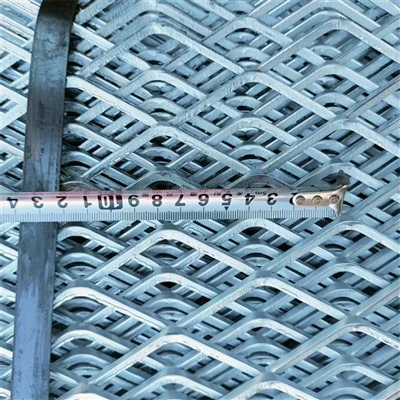
If you’re working on a project that requires perforated mesh sheet, whether it’s a facade, a filter, a fence, an acoustic panel, or something else entirely, we’re here to help. We can walk you through perforation ratios, adjust them to fit your needs, provide samples, and make sure you get exactly what your project requires. Don’t waste time guessing at numbers—reach out to us today to start your conversation.
Crimped Wire Mesh References
- Perforated Metals Design Handbook. Industrial Perforators Association, 2018.
- Tensile Strength and Perforation Ratio Relationships for Metal Mesh. Journal of Materials in Construction, Vol. 32, No. 4, 2020.
- Acoustic Performance of Perforated Metal Panels. Noise Control Engineering Journal, Vol. 67, No. 2, 2019.
- Standard Test Methods for Perforated Metal Sheet Open Area and Ratio. ASTM International, Standard E2381-19, 2019.
Anping Binze Wire Mesh Products Co., Ltd.
We are one of the most experienced perforated mesh sheet manufacturers and suppliers in China, also support customized service. Please feel free to buy high quality perforated mesh sheet for sale here from our factory. For price consultation, contact us.
Address: Taicheng Industrial Zone, Anping County, Hengshui City, Hebei Province
E-mail: binzemesh@outlook.com
WebSite: https://www.binze-mesh.com/
