Hey there! I’m a supplier of sintered wire mesh material and filter. Over the years I’ve dealt with all sorts of customers, from small businesses to big industries. One question that comes up again and again is, "What factors affect the cost of sintered wire mesh filter?" Well, I’ve got some insights to share with you based on my real – world experience. Sintered Wire Mesh Material and Filter

Wire Material
The type of wire used in the sintered wire mesh filter is a major cost determinant. Stainless steel is one of the most commonly used materials. It’s popular because it’s corrosion – resistant, strong, and can handle a wide range of temperatures. But there are different grades of stainless steel. For example, 304 stainless steel is more affordable compared to 316 stainless steel. The latter has a higher percentage of nickel and molybdenum, which gives it better corrosion resistance, especially in harsh chemical environments. So, if you need a filter for a chemical plant where the chemicals are highly corrosive, you’ll probably end up paying more for a filter made of 316 stainless steel.
On the other hand, if gold or silver wires are used, which is super rare but possible for certain high – end or specialized applications, the cost will skyrocket. These precious metals bring unique electrical or chemical properties to the filter, but they also come with a very high price tag.
Mesh Specification
The mesh size is another crucial factor. A fine – mesh sintered wire mesh filter, with a high number of openings per unit area, is more expensive to produce. Making fine meshes requires more precise manufacturing processes. The wires need to be thinner, and the weaving or sintering process has to be more accurate to ensure consistent pore sizes.
For instance, a filter with a mesh size of 200 mesh will generally cost less than one with a 500 – mesh size. The 500 – mesh filter can trap much smaller particles, but it takes more time and effort to produce. Also, the wire diameter matters. Thinner wires are more difficult to work with and are more prone to breakage during the manufacturing process. So, filters made with thinner wires usually cost more.
Filter Size and Shape
Size matters when it comes to the cost of sintered wire mesh filters. Larger filters require more material. More wires mean more raw material costs, and also more labor and machinery time to produce. A small, circular filter used in a laboratory device will be much cheaper than a large, rectangular filter used in an industrial air filtration system.
The shape of the filter can also add to the cost. Standard shapes like circles, squares, and rectangles are relatively easy to manufacture. But if you need a custom – shaped filter, like an oval or a complex geometric shape, it will cost more. The manufacturing equipment may need to be adjusted, and sometimes special jigs or molds have to be made, all of which increase the production cost.
Sintering Process
The sintering process is what holds the wire mesh together. Different sintering methods can affect the cost. Vacuum sintering, for example, is a high – end process. It can produce filters with better density and higher quality. In a vacuum environment, there’s less chance of oxidation or contamination during the sintering process. This results in a more reliable and durable filter, but the equipment and energy required for vacuum sintering are expensive.
Atmospheric sintering is a more common and cost – effective method. It’s done in a normal air environment, which is simpler and cheaper. However, the quality of the resulting filter may not be as high as that of a vacuum – sintered filter.
Quantity Ordered
If you’re a savvy buyer, you probably know that volume discounts are a thing. When you order a large quantity of sintered wire mesh filters, the unit cost usually goes down. This is because the fixed costs associated with setting up the production line, such as tooling and equipment setup, can be spread over a larger number of units.
Let’s say you need 10 filters. The cost per filter might be $50. But if you increase your order to 100 filters, the cost per filter could drop to $40. This is beneficial for both the supplier and the buyer. The supplier gets a big order, which helps with cash flow and efficiency, and the buyer saves money.
Quality Requirements
The quality standards you set for the filter will also impact the cost. If you need a filter with very strict quality control, such as low particle shedding or high dimensional accuracy, it will cost more. Achieving these high – quality standards requires more rigorous testing and inspection procedures.
For example, if a filter is going to be used in a cleanroom environment, it has to meet strict cleanliness requirements. This means additional cleaning and testing steps during production, which add to the overall cost.
Market Conditions
The general market conditions can’t be ignored. Fluctuations in the prices of raw materials, such as steel, can directly affect the cost of sintered wire mesh filters. If there’s a sudden shortage of steel due to a strike at a major steel mill or increased demand from other industries, the price of stainless steel wire will go up, and so will the cost of the filters.
The cost of labor can also vary depending on the region and the economic situation. In areas with high labor costs, the manufacturing cost of the filters will be higher. Additionally, competition in the market can play a role. If there are a lot of suppliers offering similar products, the prices may be more competitive. But if there’s a monopoly or limited supply, the prices can be higher.
Additional Processing
Sometimes, customers need additional processing on their sintered wire mesh filters. This could include coating the filter with a special material to enhance its performance. For example, a PTFE coating can make the filter more resistant to chemicals and improve its non – stick properties. However, applying a coating involves additional materials and processing steps, which increase the cost.
Another type of additional processing is welding or joining the filter to other components. If you need the filter to be part of a larger assembly, the welding process has to be done carefully to ensure proper functionality. This requires skilled labor and additional equipment, all of which contribute to the final cost.
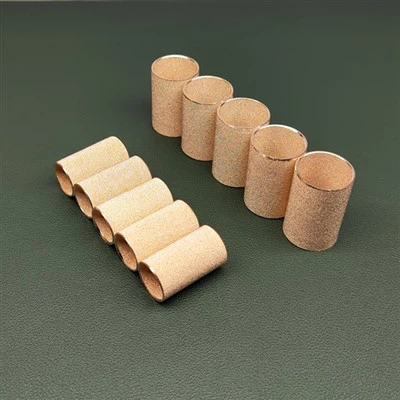
So, there you have it – all the major factors that can affect the cost of sintered wire mesh filters. As a supplier, I understand that cost is always a concern for buyers. That’s why I’m here to work with you to find the best solution for your needs and budget. Whether you’re looking for a high – end filter for a critical application or a more cost – effective option for a general purpose, I can help.
Wedge Wire Filter Screen If you’re interested in purchasing sintered wire mesh materials or filters, or if you have any questions about the pricing or specifications, feel free to reach out. Let’s have a chat and see how we can work together to meet your filtration requirements.
References
- Handbook of Filtration Technology
- Industrial Wire Mesh Manufacturing Guide
- Journal of Materials Science and Engineering in Filtration Applications
Henan Easy Filter Equipment Co., Ltd.
As one of the leading sintered wire mesh material and filter manufacturers and suppliers in China, we offer a wide range of products with superior quality. Please rest assured to buy advanced sintered wire mesh material and filter from our factory. We also accept customized orders.
Address: Apartment No.1, Building No.2, Zhengshang Jinyushijia, Xinzhong Street, Xinxiang, Henan, China.
E-mail: vivian@easyfiltertech.com
WebSite: https://www.easyfilter-china.com/
