As an MPPT solar charge controller supplier, I get this question every single day from solar panel owners, installers, and even people who are just starting to dip their toes into off-grid or grid-tied solar systems. Let me cut through the noise—yes, an MPPT (Maximum Power Point Tracking) solar charge controller absolutely can increase the efficiency of your solar panels. But before we dive into the why and how, let’s first break down what makes MPPT different from its older cousin, the PWM (Pulse Width Modulation) controller, because that’s where a lot of confusion starts. Mppt Solar Charge Controller
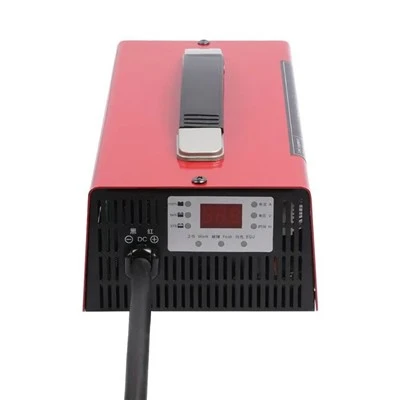
Here’s the thing about solar panels: they don’t output a fixed voltage, like a laptop charger or a phone cable. The voltage they produce changes depending on sunlight intensity, temperature, and even what else is connected to your system. Every panel has a “sweet spot” called the Maximum Power Point (MPP)—that specific voltage and current combination where the panel produces the most power possible for its current conditions. If you hook a panel up directly to a battery (or a PWM controller, for that matter), you’re often forcing it to operate somewhere away from that sweet spot, wasting precious energy that could be powering your home or charging your batteries. That’s where MPPT controllers earn their keep.
Let me give you a real example from a customer I worked with last month. He had a 12-panel off-grid system on his cabin, all hooked up to a PWM controller. After replacing the PWM with one of our MPPT units, he noticed his battery charge rate went from 3 amps to 10 amps on a clear midday. That’s not just a small gain— that’s over 200% more energy being pulled from the same exact panels, same roof, same amount of sunlight. Why? Because the MPPT controller wasn’t just passively sending power to the battery like a PWM does—it was constantly adjusting its operating parameters to pull the maximum possible power from each panel, then converting that excess voltage (since panels often output higher voltage than batteries, especially in cold weather) down to the voltage the battery needed to charge safely. PWM controllers, by contrast, can only handle a panel array that’s the same voltage as the battery bank. If you have panels wired to output higher voltage (which you should, for longer wire runs and less power loss), a PWM controller will just waste the extra voltage as heat. Our MPPT units turn that “wasted” voltage into usable current, which is where the efficiency jump comes from.
Now, let’s get into the science behind it, because this isn’t just sales fluff. Solar panels follow a non-linear I-V (current-voltage) curve. At low voltage, current rises linearly with voltage, but as you approach the MPP, the curve flattens out—go past that point, and current drops sharply. PWM controllers operate the panel at a fixed voltage, usually matching the battery’s charge voltage (for a 12V battery, that’s around 14.4V). If the panel’s MPP is at 17V on a bright, cold day, the PWM will force the panel to run at 14.4V, which is below the MPP, so you’re leaving power on the table. MPPT controllers use a microprocessor (and that’s the part that makes them more advanced, not just a hunk of metal) to sample the panel’s voltage and current every few milliseconds, calculate the power being produced, and adjust the controller’s output to nudge the panel right to that MPP. It’s like having a GPS for your solar system—always finding the best path, instead of just following a fixed route that might be slow or have traffic.
But wait—does that mean every MPPT controller will work the same? Absolutely not. Not all MPPT units are created equal, and that’s where our experience as a supplier comes in. I’ve seen cheap, no-name MPPT controllers that actually lower efficiency because their tracking algorithms are slow or inaccurate. They might miss the MPP when sunlight changes (like when a cloud passes over) and take too long to adjust, wasting energy in the transition. That’s why we design our MPPT controllers with dual-core processors, optimized tracking algorithms that adapt to different panel types (monocrystalline, polycrystalline, thin-film), and temperature sensors that adjust for panel heat—since panel voltage drops as temperature rises, so the MPP shifts too. On average, a quality MPPT controller will improve solar panel system efficiency by 20-30% compared to a PWM controller, and that number can go even higher if you have a large array, long wire runs, or live in a area with extreme temperature swings (like cold mornings followed by hot afternoons, where panel voltage shifts a lot).
Let’s talk about when an MPPT controller is especially worth the investment. If you have a solar array with more than 100 watts of panels, or a battery bank higher than 12V, MPPT is the way to go. If you’re planning to expand your solar system in the future—adding more panels, or going from 12V to 24V or 48V batteries—an MPPT controller will handle that expansion seamlessly, while a PWM controller would require an upgrade or could even damage the old PWM. I had another customer who tried to save money by going with PWM for his 24V system, but when he added 4 more panels, the PWM couldn’t handle the higher array voltage and started overheating. Swapping to our MPPT controller fixed that, and he’s now getting consistent power even on cloudy days.
Another common question I get: “What about grid-tied systems? Do MPPT controllers help there too?” The short answer is yes, because even grid-tied inverters can benefit from the MPPT’s ability to pull maximum power from the panels before feeding it to the grid. However, in grid-tied systems, the inverter often has its own MPPT functionality, but pairing it with a high-quality MPPT charge controller (if you’re also using battery backup) will still boost overall efficiency, especially if your battery system is a big part of your setup. Off-grid systems, where batteries are the primary power source, see the biggest gains because every bit of extra power from the panels goes directly to charging your batteries instead of being lost as heat.
Now, let’s address a myth I hear all the time: “MPPT controllers are too expensive, so it’s not worth it.” I get it—upfront cost is a factor. But let’s do the math. A 100W panel on a PWM controller might produce around 400Wh of energy per day (on average, over a month). The same panel on an MPPT controller will produce around 500Wh per day, that’s an extra 100Wh every day. Over a year, that’s 36,500Wh, or 36.5 kWh of extra energy. If your local electricity rate is $0.15 per kWh, that’s $5.47 per year in savings. Wait, but let’s scale that up—if you have a 10-panel system, that’s 365 kWh per year, which is $54.75. That’s not chump change, and it adds up over the lifespan of your solar panels (which is 25+ years). Plus, MPPT controllers last longer than PWM units, because they don’t have to handle the same amount of heat from wasted voltage, so you’ll save on replacement costs too.
As a supplier, I’ve also learned that a lot of people are worried about installation complexity. I won’t lie—MPPT controllers can be a bit more technical to set up than PWM, but most of our units come with step-by-step guides, and our support team is on hand to help with any questions. We also offer pre-wired options for small systems, so even if you’re not very handy, you can get your MPPT controller up and running in no time.
At the end of the day, the core function of an MPPT solar charge controller is to unlock the full potential of your solar panels. PWM controllers are fine for tiny, low-power setups (like a 10W panel charging a single AA battery), but any real solar system that’s meant to power your home, RV, cabin, or business will benefit from the efficiency gains an MPPT controller provides. Those 20-30% extra watts don’t just translate to more power—they mean fewer days you have to rely on the grid, longer battery life, and a better return on your solar investment.
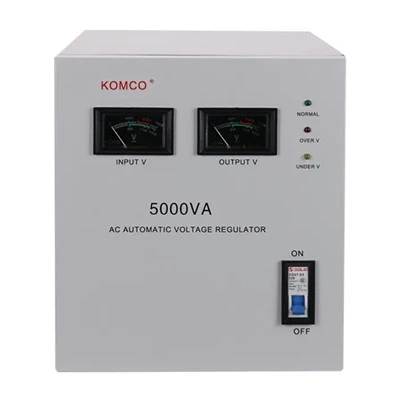
If you’re tired of leaving power on the table from your solar panels, and you’re ready to upgrade to an MPPT solar charge controller that’s built for reliability and maximum efficiency, our team is here to help. We can walk you through sizing the right controller for your array, answer any technical questions you have, and provide tailored recommendations based on your specific setup and energy needs. Reach out to us to start your procurement conversation today.
Marine Battery Charger References
Shaw, J. H. (2019). Solar Cell Fundamentals. Academic Press
Markvart, T., & Castañer, L. (2003). Practical Handbook of Photovoltaics: Fundamentals and Applications. Elsevier
Faiman, D. (2008). Assessing the performance of photovoltaic modules in real-world conditions. Progress in Photovoltaics: Research and Applications, 16(2), 153-165
Huizhou Qiangfeng Power Technology Co., Ltd.
Huizhou Qiangfeng Power Technology Co., Ltd. is one of the most professional mppt solar charge controller manufacturers and suppliers in China, featured by quality products and good service. We warmly welcome you to buy customized mppt solar charge controller made in China here from our factory. If you have any enquiry about quotation and free sample, please feel free to email us.
Address: No. 28, Hu’ao Avenue, Shiwan Town, Boluo County, Huizhou City, Guangdong Province
E-mail: Komco@Jinlidianqi.cn
WebSite: https://www.autobatterychargers.com/
