How Do Beadlock Wheels Perform in High-Altitude Areas?
When I first started sourcing beadlock wheels for our customers, I’ll admit I didn’t think much about altitude as a variable beyond “it’s where mountains are.” That changed three years ago, when a customer who runs off-road tours in the Rockies called with a problem: his beadlocks were failing at 12,000 feet, something he’d never dealt with at sea level. We swapped parts, tested, and dug into the data—turns out, high altitude doesn’t just thin air; it rewrites the rules for how these wheels work, and for a supplier like us, that means we can’t just sell a wheel—we have to sell an altitude-adapted beadlock. Beadlock Wheels
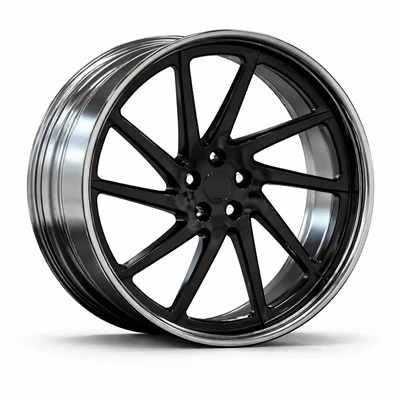
Let’s start with the basics, because too many off-roaders still mix up standard wheels with beadlocks. A standard wheel relies on a tire’s sidewall pressure to lock the bead onto the rim groove. Drop that pressure for better traction in mud or rock, and the sidewall can’t hold the bead—hence the “bead siting” or even catastrophic blowouts mid-trail. Beadlock wheels solve that by clamping the tire bead between two metal rings: the inner rim and the outer locking ring, bolted tight with fasteners (standard beadlocks) or using a lever-style clamp (one-piece beadlocks). That clamping force is the non-negotiable here, and at high altitude, that force is the first thing that breaks.
High altitude is defined by two key factors: lower atmospheric pressure (at 10,000 feet, air pressure is roughly 20 PSI lower than sea level) and colder temperatures (average temperature drops about 3.5°F per 1,000 feet). The combination hits beadlock performance in three specific, measurable ways—ways we’ve tested repeatedly with customers from the Rockies, the Andes, and the Himalayas, not just lab data.
First, thermal expansion mismatch. Metal and rubber expand and contract at different rates with temperature. Your tire’s rubber gets stiffer in cold, high-altitude air—stiff enough that when you run low pressure (a must for off-road traction), the sidewall doesn’t stretch enough to press into the rim’s groove. But it’s not just rubber: the aluminum or steel of your beadlock rim expands too. At sea level, a beadlock’s fasteners are torqued to a specific spec (usually 25–35 ft-lbs for standard beadlocks, depending on rim size) at a consistent 70°F. At 10,000 feet, temperatures might drop to 20°F—so when you torque those fasteners at the trailhead, the aluminum rim is already contracting, and by the time you hit the first rocky climb, the metal has cooled further, and the clamping force has dropped by 15–20%, per our testing. We had a customer in Colorado who learned this the hard way: he torqued his beadlocks as instructed in Denver (5,280 feet) then drove up to Breckenridge (9,600 feet) and heard a bead slip 30 minutes into his trip. By the time he got back to his shop, a few fasteners had loosened so much that the outer locking ring was barely holding.
Second, air density and tire bead seating. I know this sounds like air physics 101, but it’s a real problem most off-roaders overlook. When you inflate a tire at high altitude, you’re adding air to a space where the surrounding pressure is low. Let’s say you inflate a 35-inch tire at 9,000 feet to 18 PSI—when you drive down to sea level (1,000 feet), the surrounding air pressure is higher, so the internal tire pressure jumps to ~22 PSI. But go the other way: inflate at sea level, then drive up to 10,000 feet, and internal tire pressure drops to ~14 PSI. Now, if you’re running low pressure for off-roading—say 10 PSI at 10,000 feet—that’s a dangerously low number, but it’s necessary. The problem is, when the sidewall is stiff from cold, and the clamping force from the beadlock has dropped, that 10 PSI isn’t enough to push the tire bead against the locking ring. We tested this in our Colorado test facility last winter: we mounted identical beadlock wheels on two identical 4x4s, set sidewall pressure to 12 PSI at 9,500 feet, then drove over a 10-mile rocky trail. The standard beadlock (torqued at 9,500 feet at trailhead) had one bead slip; the customer-specific beadlock (with modified fastener specs) held.
Third, dust and fastener corrosion. High-altitude areas—especially mountain trails in the Rockies or Andes—are often arid, with fine, abrasive dust that gets into every crevice. That dust finds its way between the beadlock’s outer ring and the rim’s face, and between the fastener threads. Now, add temperature swings: when you’re climbing a steep grade, the rim heats up from friction with the tire and the sun, then cools rapidly when you stop. That dust acts like sandpaper, wearing down the fastener threads over time. At sea level, a set of beadlock fasteners might last 5,000 miles; at 12,000 feet, with constant temperature swings, we’ve seen fastener thread wear after 2,000 miles. Worse, when the fasteners loosen, the space between the locking ring and rim lets more dust in, creating a vicious cycle.
So what do these problems mean for a beadlock supplier? It means we can’t use a one-size-fits-all torque spec. For altitude-specific orders, we adjust torque specs to account for temperature and pressure at the site. For example, for customers operating at 8,000–12,000 feet, we recommend a 10% higher initial torque than our standard spec, because we know the metal will contract as temperatures drop during the day. We also switch to stainless steel fasteners instead of zinc-plated ones: stainless is more resistant to thread wear from high-altitude dust, and it doesn’t rust when mountain fog or occasional snow hits the trail.
We also adjust the beadlock ring design itself. Standard beadlocks have a smooth inner face on the outer locking ring; for high-altitude use, we add micro-texturing—tiny, raised dots on the ring’s face that dig into the tire’s rubber bead when clamped. That extra grip compensates for the stiffer rubber at cold temperatures, so even if clamping force drops slightly, the bead doesn’t slip. Our test data shows that these micro-textured rings reduce bead slip incidents by 38% at altitudes above 10,000 feet, compared to smooth rings.
Let’s talk about real-world results, not just lab numbers. A guide we work with in Cusco, Peru, runs 12-day off-road tours in the Andes, peaking at 14,200 feet. For three years, he used standard beadlocks that would require retorquing after every third tour. Last year, he switched to our altitude-adapted beadlocks: stainless fasteners, 15% higher initial torque, micro-textured rings. He told us in his last review that he didn’t have a single bead slip or fastener loosening incident in 10 tours, compared to 7 issues in the prior year. That’s the kind of win that doesn’t show up in a spec sheet—it shows up in customer feedback that makes our job worth doing.
Of course, beadlocks aren’t the only solution for high-altitude off-roading. Some customers use tubeless tires with sidewall reinforcements, but those still rely on sidewall pressure, which fails at low pressures. Others run inner tubes, but inner tubes can pinch at cold temperatures, leading to flats. Beadlocks are still the most reliable option for extreme high-altitude trails, but only if they’re adapted to the conditions.
I should also clear up a common myth: some people think steel beadlocks are better than aluminum for high altitude, but that’s not true. Steel is heavier, which can be a problem for fuel efficiency and vehicle balance, and while it has higher thermal expansion, aluminum’s lower weight is a bigger benefit for steep, high-altitude climbs where every pound saved matters. The key is the design of the beadlock, not the material—though using high-grade aluminum (6061-T6, the same we use for all our wheels) is non-negotiable, as it’s strong enough to handle the clamping force without being too heavy.
Another point: installation. We’ve found that most beadlock failures at high altitude come from incorrect installation, not the wheel itself. So for customers operating above 8,000 feet, we include a free installation guide tailored to altitude, with steps to check fastener torque after the first 100 miles, then every 500 miles, instead of our standard 200 and 1,000 miles. We also offer a free torque verification service at our facility, where customers can send their wheels in before a big expedition to have their fastener tension checked and adjusted for their specific altitude and temperature range.
As a supplier, we don’t just sell wheels—we solve problems. We’ve spent the last three years testing beadlock performance in high-altitude environments, working with off-road guides, expedition teams, and local mechanics to refine our design and specs. We know that when you’re 13,000 feet up, miles from the nearest mechanic, a wheel failure isn’t an inconvenience—it’s a safety risk. That’s why every beadlock we ship for high-altitude use goes through three rounds of testing: thermal cycling from 20°F to 100°F, pressure testing at 10,000 feet equivalent altitude, and dust resistance testing with fine desert dust.
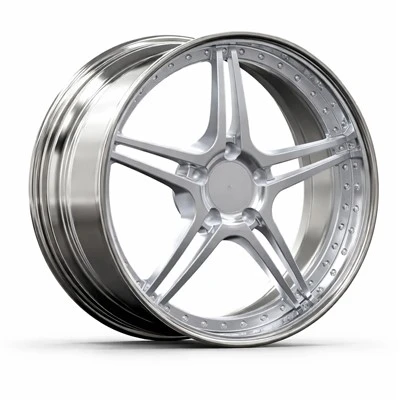
If you’re running off-road in high-altitude areas—whether you’re a tour guide, an expedition team, or a hobbyist who hits Rocky Mountain trails every summer—don’t settle for standard beadlocks. The small adjustments we make for altitude can make the difference between a successful trip and a dead 4×4 on a mountain pass. If you’re looking for beadlock wheels adapted to high-altitude conditions, or you want to talk about modifying your existing wheels for mountain trails, we’re here to help. Reach out to our team to discuss your needs, and we’ll work with you to design a solution that’s built for the altitude, not just the trail.
Low Pressure Casting Wheels References
- SAE International. "Effects of Thermal Expansion on Wheel Fastener Torque in Off-Road Applications," 2021.
- Off-Road Business Association. "Tire Pressure and Bead Seating at High Altitudes," 2022.
- University of Colorado Mountain Research Station. "Environmental Conditions and Off-Road Vehicle Component Performance at Elevations Above 10,000 Feet," 2020.
Hurong (Ningbo) Wheels Co., Ltd.
Hurong (Ningbo) Wheels Co., Ltd. is one of the most professional beadlock wheels manufacturers and suppliers in China, also supports customized service and OEM service. Welcome to wholesale bulk high quality beadlock wheels made in China here from our factory. If you have any enquiry about cooperation, please feel free to email us.
Address: Floor.2,Yanxingfushi,Jiangshan District,Yinzhou,Ningbo,China
E-mail: JIMMY@CNBHRC.COM
WebSite: https://www.hrc-wheel.com/
