Hey there! I’m a supplier of bread and toast forming lines, and I’m super excited to share with you how the feeding system in these awesome machines works. It’s a crucial part of the whole process, and understanding it can really help you get the most out of your bread and toast production. Bread and Toast Forming Line

The Basics of the Feeding System
Let’s start with the big picture. The feeding system in a bread and toast forming line is all about getting the right amount of dough to the right place at the right time. It’s like a well – choreographed dance, where every step is carefully planned to ensure a smooth and efficient production process.
The main goal of the feeding system is to take the bulk dough from the mixer and distribute it evenly into the forming section of the line. This might sound simple, but there are a lot of factors at play. You’ve got to deal with different types of dough, which can vary in consistency, density, and stickiness. And you need to make sure that the dough is fed at a consistent rate, so that each loaf or slice of toast comes out the same size and quality.
Components of the Feeding System
Dough Hopper
The journey of the dough starts in the dough hopper. This is basically a big container where the freshly mixed dough is dumped. The hopper needs to be of a suitable size to hold enough dough for continuous production, but not so big that the dough at the bottom starts to settle or go bad.
The hopper usually has some kind of agitator or stirrer. This is important because it keeps the dough in a homogeneous state. Without it, the dough could start to separate, with the heavier parts sinking to the bottom, and the lighter, air – filled parts rising to the top. The agitator gently turns the dough, ensuring that it has a consistent texture throughout.
Auger or Conveyor
Once the dough is in the hopper, it’s time to move it forward. This is where the auger or conveyor comes in. An auger is a screw – like device that rotates inside a tube. As it turns, it grabs the dough from the hopper and pushes it along the tube towards the next stage. Conveyors, on the other hand, are belts that carry the dough. They can be flat or have some kind of trough to hold the dough more securely.
The speed of the auger or conveyor is carefully controlled. This is to make sure that the dough is fed at a consistent rate. If it’s too fast, the forming section might get overwhelmed, and you could end up with misshapen loaves. If it’s too slow, the production will be inefficient, and you’ll lose out on potential profits.
Dosing Unit
The dosing unit is like the traffic cop of the feeding system. Its job is to measure out the exact amount of dough that is needed for each loaf or slice of toast. There are different types of dosing units, but the most common ones use pistons or valves.
Piston dosing units work by pushing a specific volume of dough out of a chamber with a piston. The size of the chamber can be adjusted to change the amount of dough that is dosed. Valve dosing units, on the other hand, open and close to let a certain amount of dough pass through. They are often used for more viscous doughs.
The accuracy of the dosing unit is crucial. If the amount of dough is off, it can affect the size, shape, and quality of the final product. For example, if too much dough is dosed, the loaf might be too big and not bake properly. If too little is dosed, the loaf will be small and under – developed.
Dealing with Different Dough Types
One of the challenges of the feeding system is dealing with different types of dough. You’ve got your soft, sticky doughs, like those used for white bread, and your denser, firmer doughs, like those used for whole wheat bread or rye bread.
For soft and sticky doughs, the hopper agitator needs to be set at a higher speed to prevent the dough from clumping. The auger or conveyor might need to have a special coating to prevent the dough from sticking to it. And the dosing unit might need to be adjusted to account for the dough’s low resistance to flow.
Denser, firmer doughs, on the other hand, need a slower agitator speed to avoid over – compacting the dough. The auger or conveyor needs to have enough power to move the heavier dough, and the dosing unit might need to apply more pressure to push the dough out.
Maintenance and Cleaning
Maintaining and cleaning the feeding system is essential for its proper functioning. Dough can be sticky, and if it’s not cleaned properly, it can build up in the hopper, auger, or dosing unit, causing blockages and affecting the quality of the final product.
Regularly cleaning the hopper involves scraping out any leftover dough and wiping it down with a clean cloth. The auger or conveyor also needs to be cleaned regularly. For augers, this might involve disassembling it and cleaning the screw and the tube. Conveyors can be cleaned by running a cleaning solution over them and then wiping them dry.
The dosing unit is also a critical component to clean. It’s important to make sure that the pistons or valves are clean and working properly. Any blockages in the dosing unit can lead to inaccurate dosing, which can ruin the whole batch of bread or toast.
The Impact on the Final Product
The feeding system has a huge impact on the final product. If the dough is fed inconsistently, the loaves or slices of toast might end up with different sizes and textures. This can be a big problem for bakeries, as customers expect a consistent product.
A well – functioning feeding system ensures that each loaf or slice of toast has the right amount of dough, which means that they will bake evenly and have a consistent taste and texture. This is essential for building a good reputation and keeping customers coming back for more.
Why Choose Our Bread and Toast Forming Line
Our bread and toast forming line is designed with the most advanced feeding system technology. We’ve spent years perfecting the design to ensure that it can handle all types of dough with ease. Whether you’re making soft, white bread or dense, whole wheat bread, our feeding system will ensure that the dough is fed consistently and accurately.
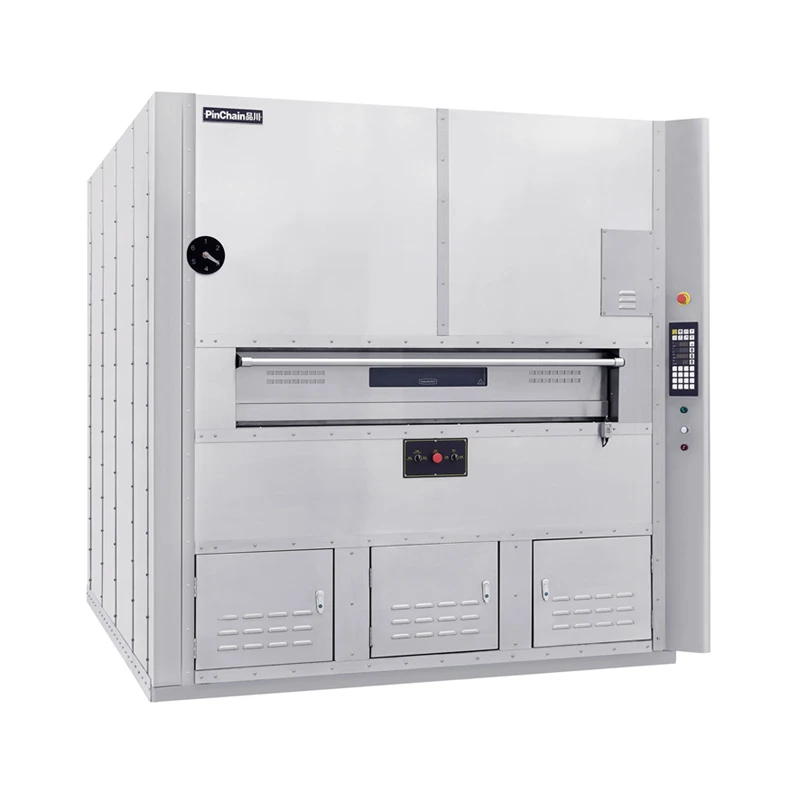
Our hoppers are made with high – quality materials that are easy to clean and maintain. The augers and conveyors are strong and durable, and they have been designed to prevent dough from sticking. Our dosing units are super accurate, and they can be easily adjusted to suit different production needs.
Freezer If you’re in the market for a new bread and toast forming line, or if you’re looking to upgrade your existing one, I’d love to talk to you. We can customize our feeding system to meet your specific requirements, and we offer excellent after – sales support. So, don’t hesitate to reach out if you’re interested in improving your bread and toast production.
References
- "Bakery Technology and Engineering" by Patrick Cauvain and Stanley Young
- "Industrial Baking Technology" by Jozef Poels
Guangdong Pinchain Machinery Co., Ltd.
As one of the most professional bread and toast forming line manufacturers and suppliers in China, we have world-leading production equipment and strong manufacturing capabilities. Please feel free to wholesale advanced bread and toast forming line made in China here from our factory.
Address: Room 302, Building 9, CIMC High tech Intelligent Manufacturing Center, No.3 Chanxing 1st Road, Xianyong Village, Chencun Town, Shunde District, Foshan City, Guangdong Province
E-mail: kowa@bakingmachinery.com
WebSite: https://www.bakingsmachinery.com/
